
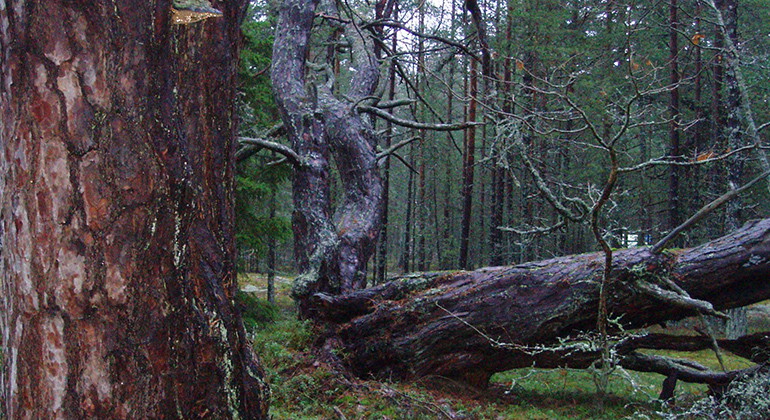
Skeppersäng is a mosaic of natural environments - from pine and deciduous forests to sun-open pastures. The nature reserve is a haven for a number of rare animals and plants. For example, the reserve's sandy pastures are home to the critically endangered species of grasshopper.
Old pine forest grows in the northern parts of the reserve. The forest has grown up on a formerly open flying sand field. A windswept and lean environment, which has characterized the older pines that are low-growing and crooked. Many of the oldest pine trees are home to the pine thistle, a wood-living fungus that is only found on pines older than 150 years. Between the trees you can spot the beautiful orchid white wood lily. The yellow fly agaric and the pale spider mite are other rarities that thrive in the calcareous, sandy soil. From the sparse pine forests, the monotonous humming of the nightjar can be heard in the summer night.
In several places in the reserve there are deciduous forests that have grown up on abandoned pastures and hay meadows. Some of the trees are old and coarse; trees that grew up when the land was still open. Some of the old trees are so decayed that cavities have formed in the trunk. Here and there are also fallen trunks - flames. The old and dead trees are very valuable. The decaying wood is home to beetle larvae and other bugs. Woodpeckers are familiar with this. If you see wood that has been chopped up, a woodpecker has been out hunting for the wood-dwelling animals.
In the pastures closest to Getterum village lives the rare species of grasshopper. It is usually found on the Russian steppes and in mountainous areas of central Europe, but in northern Europe it is only found in one place, here on the northernmost part of Öland. The grasshopper is associated with open grasslands with sandy patches and is threatened by the increasing rarity of this type of environment.
There are several ancient remains in the nature reserve. House foundations, stone walls and the remains of an ancient settlement show that people have lived and worked here since the early Iron Age (500 BC - 550 AD).
Decision year: 2009 (1998)
Area: 73.6 hectares
Municipality: Borgholm
Landowners: Swedish Environmental Protection Agency, Sveaskog AB and individuals
Administrator: Kalmar County Administrative Board
About 3 km southeast of Byxelkrok. From road 136 turn towards Grankullavik and after about 1.5 km there are signs to the parking lot on the right.Parking lot for a small number of cars is in the northern part of the area.
In the nature reserve you are not allowed:
C. Regulations for the public according to Chapter 7, Section 30 of the Environmental Code on the right to travel and stay in the reserve and on order in general within the reserve.
It is forbidden to enter the reserve:
The regulations under C do not apply to owners or holders of special rights to property or holders of other rights.
Per Markus Jönsson
Stil et spørgsmål til andre Naturkartan-brugere.
0 anmeldelser
Der er endnu ingen brugerbilleder. Vær den første til at dele et!