Mörbylånga kommun - Öland
Välkommen till vårt fantastiska friluftsliv i v...

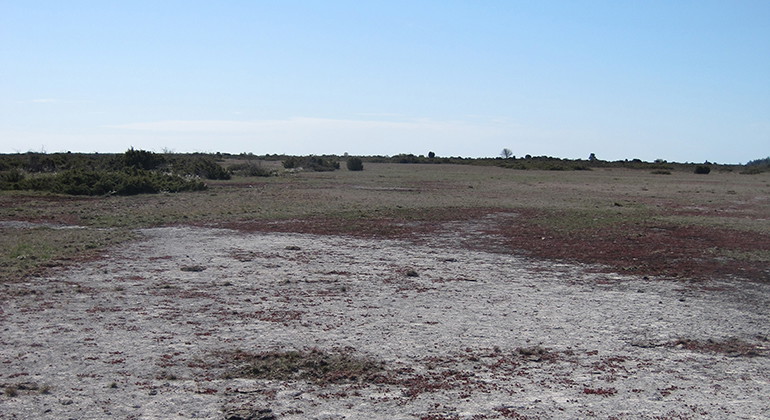
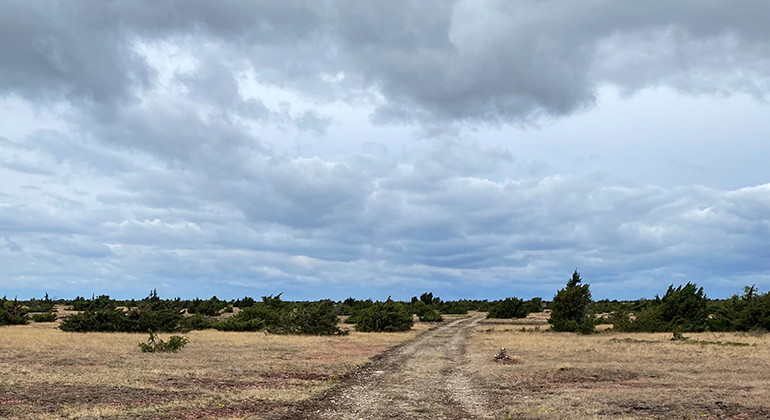
The reserves protect nature typical of Stora Alvaret, with barren rocky and gravelly soils and lush wet meadows. The limestone-rich soils have been grazed for millennia, which has led to a distinctive plant and animal life with many rare species. When you hike the Stora Alvarsleden trail, you have the opportunity to really experience how beautiful and powerful Stora Alvaret is with blue-winged grasshoppers buzzing around your legs. So walk slowly, there is much to discover here!
The nature reserve contains a mosaic of the typical habitats of Stora Alvaret. Barren rocky areas, where the limestone bedrock is exposed, and gravel alvars with hardly any soil cover at all. Wet meadows covered by a dense carpet of grasses and herbs, and wetlands that dry out in summer and fill with water during the winter months.
The Alvar has a very special flora. Some of the species that grow here are native to the tundra in the mountains, such as wormwood, gray raba and mountain carnation. Others are specially adapted to the alvar and grow nowhere else in the world, such as island sunflower and alvar wormwood. During the summer and late summer, you can experience an incredibly rich flowering of back thyme and axveronica. Small sand lily also grows here and there.
One of the hallmarks of the alvar is the orchids. In early summer, yellow and pink fields of Adam's and Eve's and St. Peter's keys spread out. One fascinating species is the flyflower, whose flowers look and smell like those of a female stickleback. When the male fly agaric sits on the flower, pollen sticks to it and the fly then carries it to the next flower.
The skylark is one of the characteristic birds of the Alvar. Already in March you can hear its jubilant trills. In April, stonechats and avocets arrive. The stonechat is usually seen near cairns and walls, while the hobby likes to sit in juniper bushes tended by sheep. During the summer, you can hear the wistful call of the heath pipit. In Tranekärr you have a good chance of seeing waders such as the marsh wagtail, red-legged kittiwake and lapwing.
Hiking trails and visitor information
At Tranekärr you can now enjoy really good birdwatching.
Here you can walk along the Stora Alvar Trail across Stora Alvaret to Frösslunda alvar. The trail is marked with stone cairns. The trail is possible to cycle, but not throughout the year. At Tranekärr there are major floods during the winter months. Near the middle wall there is a settlement with a remaining chip, Präströr. At the wetland Tranekärr there are good opportunities for good birdwatching. Tranekärr extends over the two Karlevi alvars in a north-south direction.
Year of decision: Norra Karlevi 1999 and Södra Karlevi 1992
Area: Norra Karlevi 363 hectares and Södra Karlevi 653 hectares.
Municipality: Mörbylånga
Landowner: Individual
Administrator: Kalmar County Administrative Board
The reserve is part of the World Heritage Site Southern Öland Agricultural Landscape
Follow road 136 south towards Ottenby. About 100 m south of Karlevi stone mill there is a small parking lot on the east side of the road by the gate.
In Karlevi North Nature Reserve you are not allowed:
In Karlevi södra nature reserve you may not:
C. Regulations according to Chapter 7, Section 30 of the Environmental Code on the right to travel and stay in the reserve and on order in general.
Within the area it is forbidden to;
C. Regulations according to Chapter 7, Section 30 of the Environmental Code on the right to travel and stay in the reserve and on order in general.
Within the area it is forbidden to
Per Markus Jönsson

Stil et spørgsmål til andre Naturkartan-brugere.
0 anmeldelser
Der er endnu ingen brugerbilleder. Vær den første til at dele et!