Mörbylånga kommun - Öland
Välkommen till vårt fantastiska friluftsliv i v...

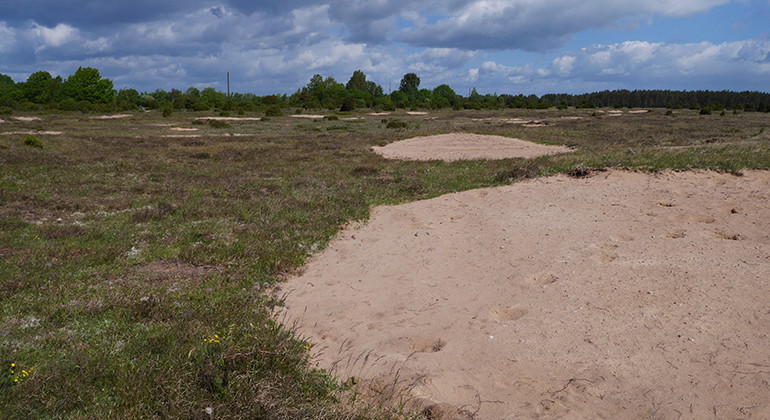
The short-cut heath gives a barren and lifeless impression from a distance. But appearances are deceiving - Gårdby sand heath offers the scent of thyme, the buzz of bumblebees and bees and colorful butterflies. Welcome to explore a teeming world of sand!
Gårdby sand heath has long been known for its exclusive plant and animal life. The list of rare plants, fungi, butterflies, beetles and other insects that live in the sandy landscape is very long. The inhabitants of the sandy heath are heat-loving and drought-resistant organisms. Many are dependent on the presence of bare, warm sand, and the rarest species are associated with the distinctive sandy steppe habitat.
The sandy steppe is one of Europe's most endangered habitats. In Sweden, only about 75 hectares remain, here on Öland and in eastern Skåne. For sandy steppe to form, lime, sand and a lot of heat and sun are required. And then disturbance of the soil surface. The sand must be constantly stirred so that the plant cover remains sparse and lime-rich sand comes to the surface. Grazing, burning and re-creation of new sand patches are therefore part of the management of the area. Most of the reserve's sandy steppe is in the eastern part of the reserve.
Gårdby sand heath has a long history as grazing land. Ever since the Middle Ages, farmers in the village of Övre Ålebäck have grazed their animals on "Flacket", as the land is called. This means that the sandy heath has been grazed for almost 800 years!
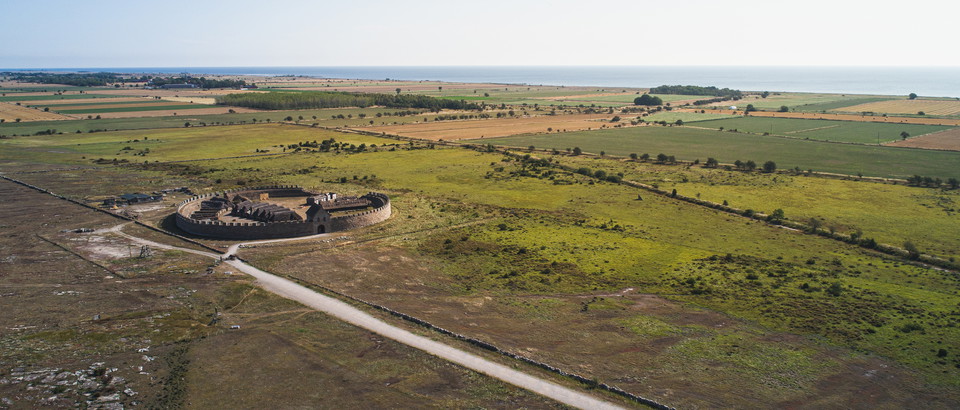
In the north-western part of the area there are two large burial grounds with stone circles from the early Iron Age. In the northwest is also "Galgbacken" - one of Öland's old execution sites.
Dung beetles is the name of a fascinating group of beetles that live in dung. Many lay their eggs in underground tunnels and therefore thrive in pastures on easily dug sandy soil. Many are rare and are on the so-called red list
The sandy steppe is home to several species of earthstars and a number of other unusual smoky fungi that are experts at surviving extreme heat and drought.
Decision year: 2014
Area: 39.4 hectares
Municipality: Mörbylånga
Landowners: Mörbylånga municipality and individuals
Administrator: Kalmar County Administrative Board
The reserve is located within the World Heritage Site of Southern Öland's cultivated landscape
The reserve is located north of Gårdby on eastern Öland. Parking is available along road 136.
In the nature reserve you are not allowed:
If you have obtained a permit from the County Administrative Board, you may:
After consultation with the County Administrative Board, you may:
C. Regulations according to Chapter 7, Section 30 of the Environmental Code on the right to travel and stay in the reserve and on order in general.
It is forbidden to enter the reserve:
It is forbidden to do so without the permission of the County Administrative Board:
It is prohibited without consultation with the County Administrative Board:
The provisions of point C do not apply to owners or holders of special rights to real estate or holders of other rights.
Per Markus Jönsson

Stil et spørgsmål til andre Naturkartan-brugere.
0 anmeldelser
Der er endnu ingen brugerbilleder. Vær den første til at dele et!