
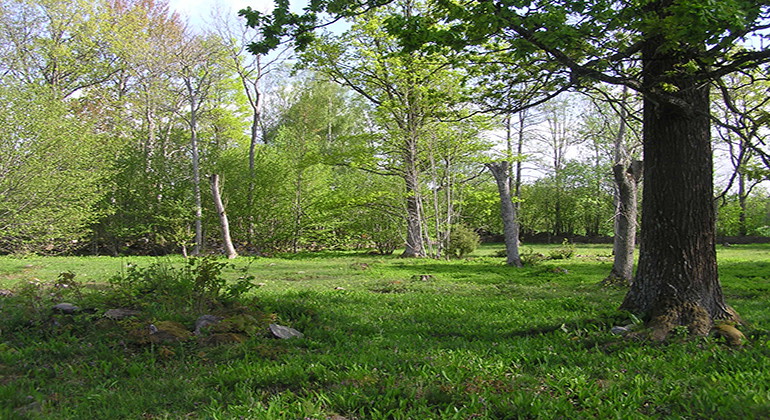
Fjelebo is a largely open meadow. For several hundred years, the land has been cut with a scythe to get hay for the cattle. A number of plants grow here that today are only found in traditionally managed land. The reserve is also home to the unusual green iris.
Old surveyor's maps show that almost the entire nature reserve has been managed as a meadow for a very long time. The meadow used to be an important type of land that provided winter feed for cattle. In an ordinary Småland parish in the mid-19th century, there could be up to 2000 hectares of hay meadows! Today, there are few hay meadows left in the agricultural landscape. The traditionally managed meadow in Fjelebo therefore has great cultural-historical value.
The traditional management of a meadow included haymaking. It was carried out in the spring when the meadow was simply cleaned and fallen twigs and leaves removed. The actual mowing took place when the flowers had gone to seed. This ensured that the flowers would grow again next year. Once the meadow was mown, the animals were let out to graze.
In late summer, the trees in the meadow were pollarded, i.e. whole branches and twigs were cut off. This was done partly to supplement the winter fodder with leaves and partly to increase the sunlight on the meadow plants. Some of the trees in Fjelebo deciduous meadow bear traces of previous pollarding. The trees are not only of cultural and historical value, they also often harbor a large number of organisms, from millimetre-sized lichens to birds that use the hollows of the trees as a nesting place.
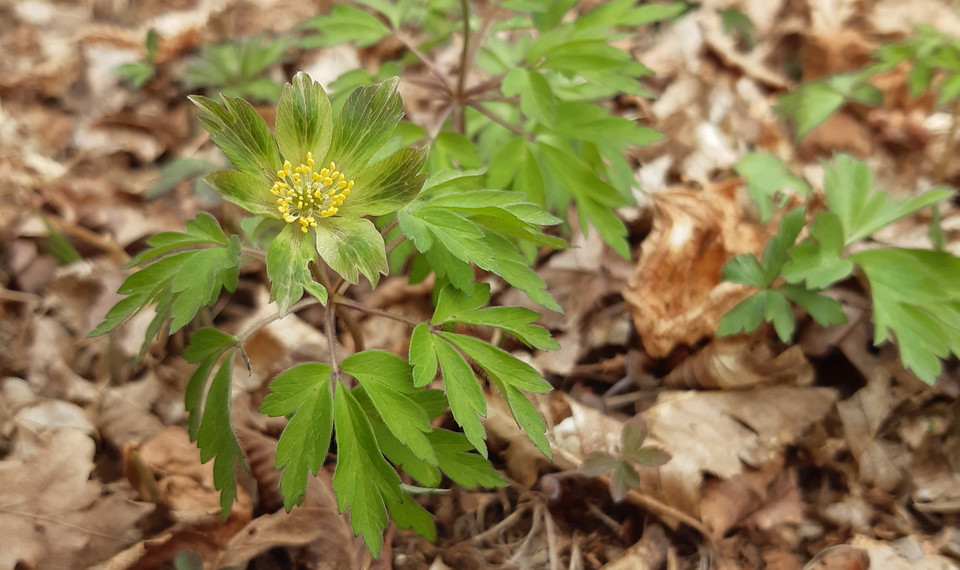
Before mowing at the end of the summer, the meadow displays an outstanding array of flowers, including more orchids. Meadow plants have developed different strategies to cope with mowing and grazing. For example, the leaf mass of some plants is concentrated in the lower part of the stem, below the height of the cut where the stem is cut by the weed. Other herbs have a leaf rosette close to the ground, thus avoiding the weed. If the grazing ceases, the meadow plants are outcompeted by a few tall grasses and herbs and deciduous shrubs. The reserve also grows an unusual form of wood anemone; "green anemone" Anemone nemorosa forma bracteata. Fjelebo is one of the few places in the county where this plant is found. In contrast to the white petals of the anemone, the green anemone has deeply lobed green leaves.
Year of decision: 1957
Area: 1.7 hectares
Municipality: Nybro
Landowner: Individual
Trustee: Kalmar County Administrative Board
Turn north at the sign Fjelebo from road 31 between Nybro and Kalmar.A small parking lot is adjacent to the reserve.
In the nature reserve you are not allowed:
C. Regulations according to Chapter 7, Section 30 of the Environmental Code on the right to travel and stay in the reserve and on order in general.
In addition to what otherwise applies, it is prohibited to:
It is forbidden to pick or dig up the green iris in question.
Per Markus Jönsson


Stil et spørgsmål til andre Naturkartan-brugere.
0 anmeldelser
Der er endnu ingen brugerbilleder. Vær den første til at dele et!