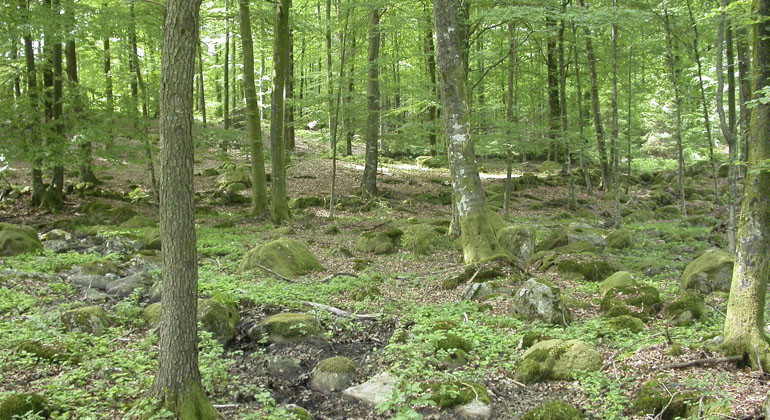
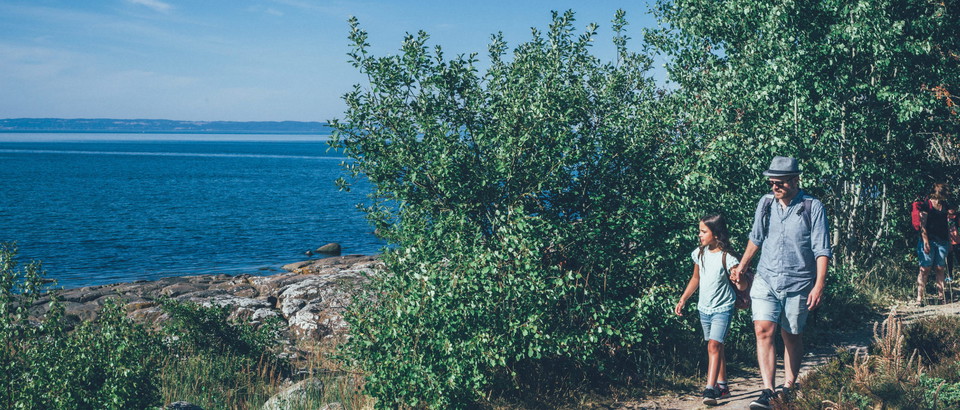
Skärbäck is a scenic and hilly area located between the three lakes Skärsjön, Humsjön and Grytsjön. The area is hilly with mountain heights and stream valleys. A good way to experience the area is to walk the 1.6 kilometer long Lillasjöstigen that runs through the reserve.
The forest is dominated by older beech forests, but there are also smaller alpine meadows and oak forest areas with a pastoral character. The reserve is part of the Åkulla beech forests area of national interest. Åkulla Bokskogar is a collective name for about ten similar nature reserves that are located in the same scenic area. The area is particularly interesting for its long continuity of beech forest. Studies of old maps of the forest's distribution, together with pollen analysis, have shown that beech forests have existed here for more than a thousand years.
Rare species
The fact that there has been forest on the site for a long time has favored species that have a slow spread and are linked to old trees, species that are rare today. In Skärbäck, several of them can be found on the trunks of beech trees, such as red pyssling lichen, noble crown lichen, beech spring lichen and lung lichen. The forest is also home to the less common birds wood pigeon and stonechat. The stone curlew is a beautiful bird with a rough beak that it uses to split cherry pits (stones). It then eats the seeds, leaving the flesh behind.
History of the area
Maps from 1652 show that at the time Halland became Swedish, there were many beech forests growing in the Åkulla area. Even in the 1800s, when large parts of Halland were deforested, the broadleaf forest remained at Skärbäck. One of the reasons may have been that the nobility did not sell Skärbäck until 1892, the last of all the farms in Sibbarp parish, and cutting in the nobility's forests was subject to restrictions. In the 1800s, the beech forest was much sparser with elements of pasture, which was due to the extensive forest grazing. Spruce forests did not appear on the property until the first seedlings were planted around 1898.