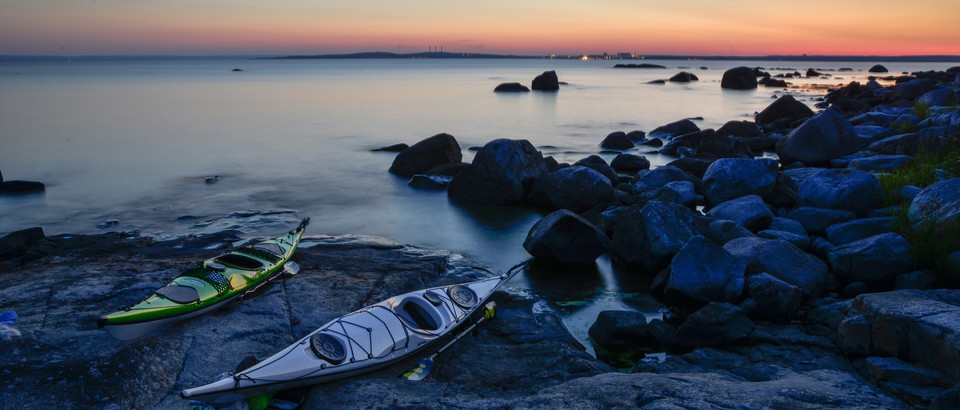
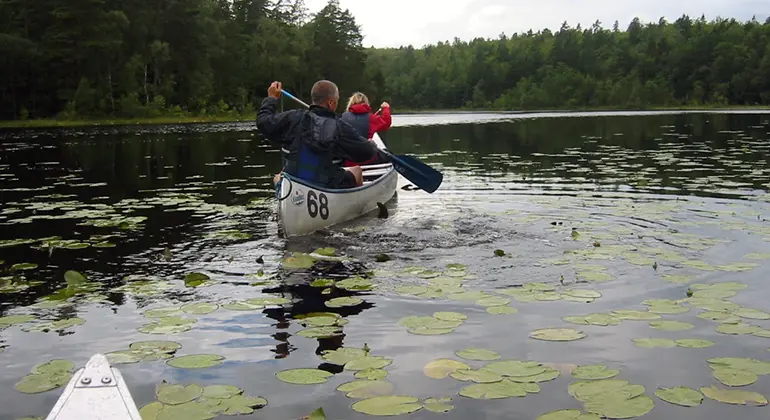
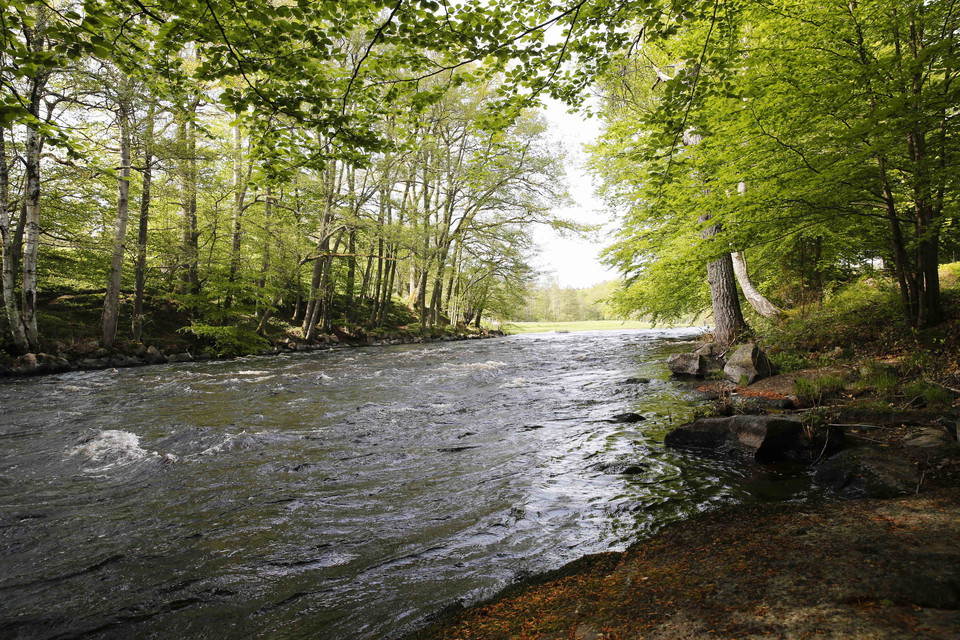
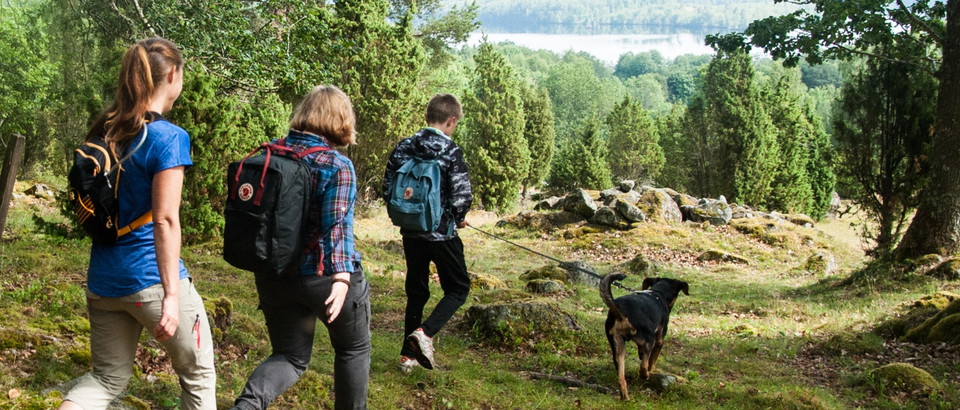
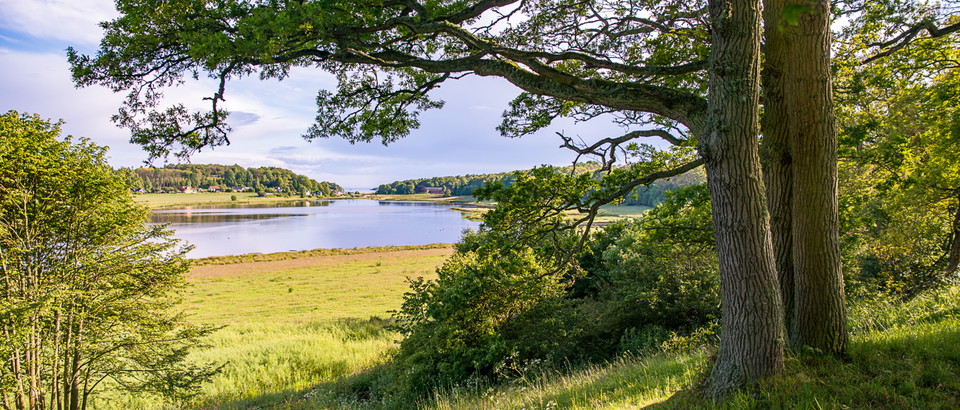
Pieboda is located on steep slopes on the southeast side of Lake Halen. The Blekingeleden trail passes through the nature reserve. You can paddle in the bay Ladfogdegylet which has a connection with Halen. Here you will experience a large contiguous deciduous forest area with natural beech forests and swamp forests, a wetland complex and grazed pastures on old arable land. There are also cultural-historical remains in the nature reserve.
Beech forests have existed here since at least the 17th century. The land within the reserve was previously outlying land for farms and crofts. Several crofts and farms were established in the area during the 19th century. On Boafall's hill there are remains of an older agricultural landscape with cairns, a stone-walled old road and small pastures. The area is now pasture.
Traces of the ice sheet
The bedrock consists of gray granite and the soil is sandy nutrient-poor moraine that is rich in boulders of various sizes. The ice sheet has left behind piles of boulders and polished rocks. The cliffs with their moss- and lichen-covered boulders and steep cliffs give a wild and exciting impression.
Varied ground conditions
There is a great variation in soil conditions, from dry elevations, via steep slopes with moving groundwater, to wetlands. The reserve contains spring areas, natural streams and underground flows.
The difference in altitude within the reserve is about 108 meters, counting from the lake surface. The highest point about 176 meters above sea level is located on Boafalls backe in the southern part. Blekinge's highest point is 189.65 meters above sea level at Rävabacken, one kilometer west of Farabol in Olofström municipality.
Charcoal and granite
Preserved ancient remains and other cultural-historical traces from recent centuries are found as farm and croft ruins, field loops with cultivation cairns, older road systems, storage and charcoal production facilities. Stone walls are found along fences and boundaries. You can also see the remains of a quarry where Halegranite was quarried for use as paving stones.
Beech forest since the 17th century
Various species of lichens, mosses, fungi and insects indicate that there has been forest in the area for a long time. This, together with historical maps and written sources, indicates that beech forests have existed here since at least the 17th century. The red-listed giant fungus moth, a large moth butterfly, is a sign of tree continuity.
In the moist environment of the forests, there are plenty of old, coarse broadleaf trees, late-growing broadleaf trees, hollow trees, standing and lying dead wood.
The wetland complex, with large swamps, marshes and bogs adjacent to the Ladfogdegylet bay, has the highest class in the national wetland inventory (VMI). Before Lake Halen was raised at the beginning of the 20th century, there were meadows here.