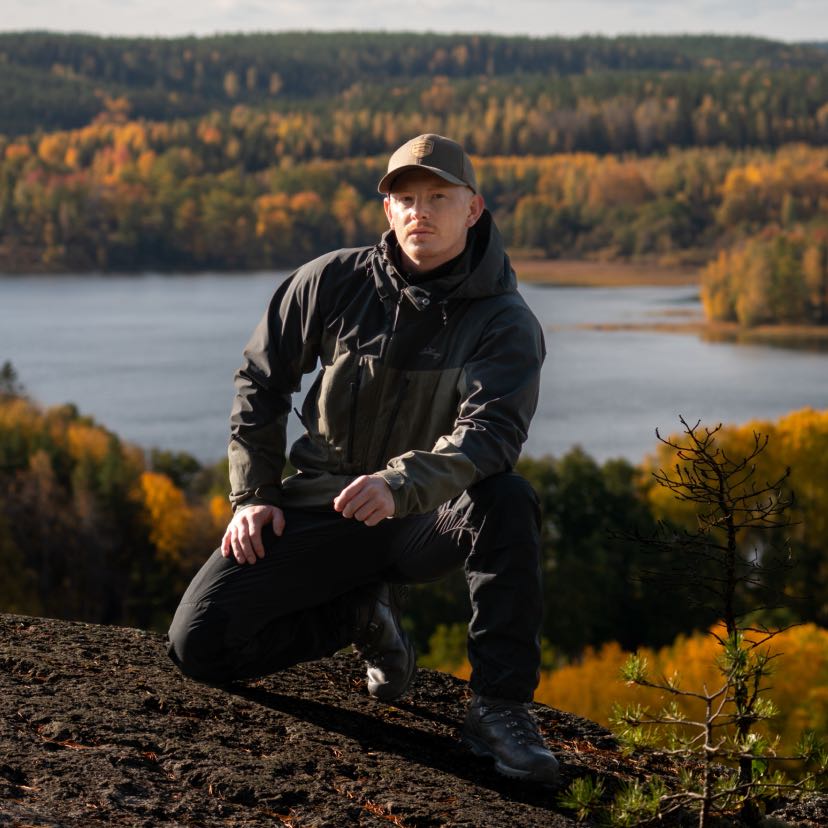
Silence, great views and a real wilderness feeling. In Hovfjället nature reserve you will find all this. Here you can hike on physically challenging hiking trails, go skiing and maybe see a grouse if you're lucky.
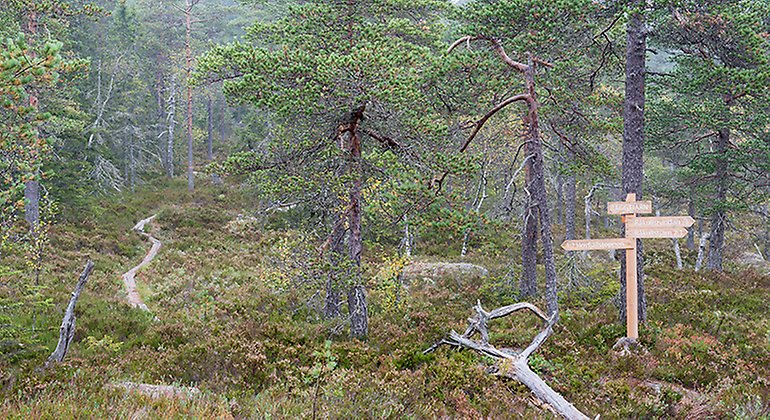
\There are several hiking trails to choose from in Hovfjället. _
Photos in the slideshow: Värmland County Administrative Board, unless otherwise stated.
Before your visit
The reserve has a trail system with about 25 kilometers of hiking trails, where all trails have difficult sections. It is steep and rocky in places, and some parts contain rutted stretches. If it has rained, your feet may get wet. So a tip is to wear boots. The Torprundan is the most accessible, but it also has shorter difficult sections where it is a bit steep and rocky.
The hiking trails go through old forest and over small bogs. From Råkulls- and Björnåsrundan you get magnificent views to the east. It's worth the effort if you can and have the energy.
There is ongoing forestry in the area, but some areas are protected. The eastern part of Hovfjället in particular gives a wilderness-like impression thanks to magnificent views, silence and old forest.
Ski trails
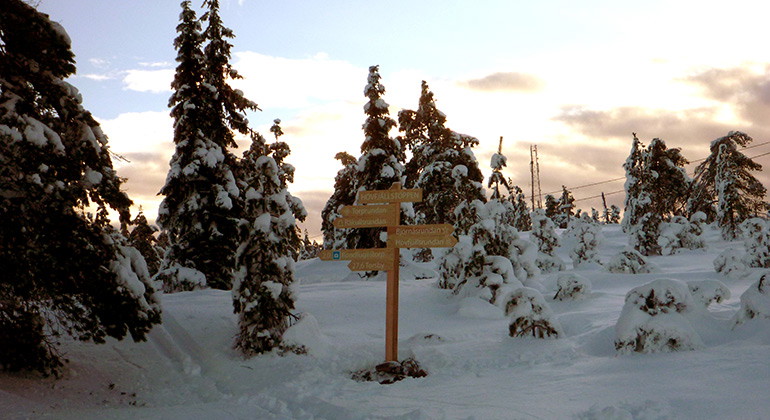
In winter, cross-country skiing is tracked and it is possible to ski downhill in the facility at the top. During the ski season, there are 20 kilometers of groomed cross-country ski trails in the nature reserve. The trails start from the trail center near Ensammentjärn. The downhill skiing facility has 15 slopes and six lifts. A snowmobile trail runs from the northern border of the reserve towards the ski resort at Hovfjällstoppen.
Remember that it is forbidden to drive snowmobiles in the entire reserve with the exception of the marked snowmobile trail.
You can find more information about skiing in the area on the Hovfjället website.
Nature and birds
In the upper part of the mountain, there are mostly lean rocky areas with plenty of heather and windswept gnarled old pines. On the slopes and in the valleys there are tall spruce forests, some of which have a natural forest character. On flatter areas there are plenty of small glades with bogs and ponds.
In the eastern part of the reserve, the landscape is steep with cliffs and terrace-like ledges. At Vargmossen, it is pure primeval forest with slender and tall spruces and gnarled pines that are over 200 years old. Really old forest can also be found at Vadjebergen, Råkullsberget and in parts of the Giljan valley. The older forest on the eastern side contains lichens that thrive in natural forests, such as lung lichen and Norwegian beak lichen. There are plenty of areas where you can pick berries. Parts of the area are part of the EU's ecological network of protected areas, Natura 2000.
Birds
The nature reserve is a haven for many species that depend on old and untouched forest for their survival. If you are lucky, you may see birds such as the capercaillie, black grouse, lichen jay, pearl owl, skylark and three-toed woodpecker.
Active forestry
There are 1,300 hectares of forest in the reserve. Forestry is carried out in large parts of the area and there may be clear-cuts here and there. Just over 600 hectares of the area's forests are protected from forestry under the nature reserve decision.
On the map you can see which parts of the reserve are protected from forestry.
Torprundan
Råkullsrundan
Björnås round
9 kilometers, difficult. Björnåsrundan takes you through a varied landscape in the eastern part of the reserve. There are good views from Björnåsen. There are rest areas at Björnåsen and Dammen. The trail follows the stream Giljan, which floods during snowmelt and also rainy periods during the summer. Avoid this trail if the ground is wet.
Hovfjällsrundan