Örnanäs, Kulturreservat
- Kulturreservat
- Landsdel: Skåne län
Handlinger
Beskrivelse
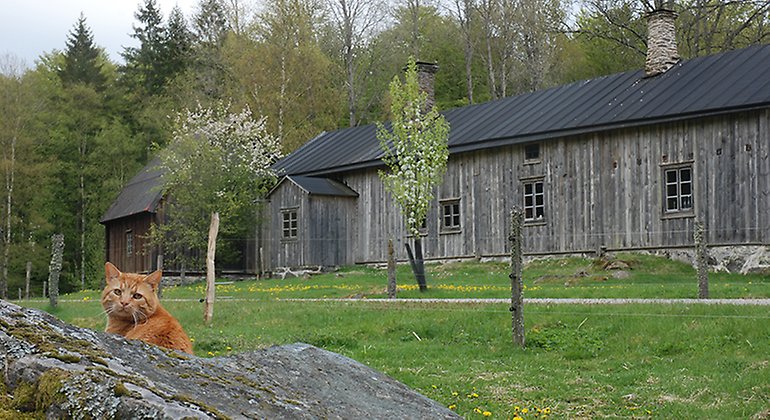
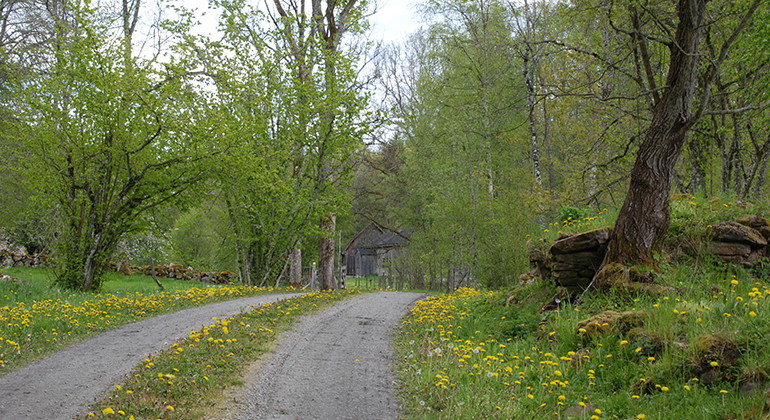
In the middle of the deep forest lies a living memorial to man's toil and hardship on a farm in northeastern Skåne's forest area. Örnanäs has existed as a farm for five hundred years and the land here bears countless traces of the area's cultivation history, especially in the 19th and 20th centuries.
Skåne's first cultural reserve
Örnanäs is the first cultural reserve in Skåne. It protects not only nature but the entire cultural-historical environment with landscapes, houses, knowledge and traditions. The Örnanäs cultural reserve was opened in 2006 and aims to show the development of a farm in the forest landscape. We get the opportunity to experience how both the living environment and the landscape may have looked over a hundred years ago.
The old farm forest
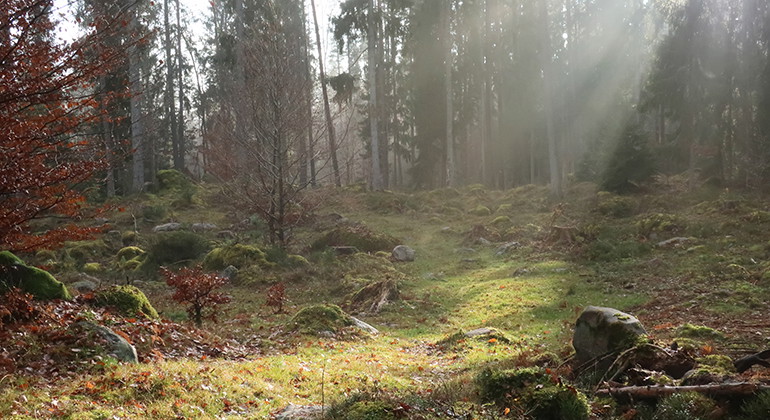
Örnanäs is also one of the best examples of the peasant forests that grew up in the forest area at the beginning of the 20th century. These were forests that met the various needs of the peasant household. The forest provided wood for building houses and fences, firewood for heating, fodder for the animals, and the animals grazed here. The forest was much more varied than today's forests. There were trees and shrubs of different ages mixed with grassy glades.
Örnanäs farm
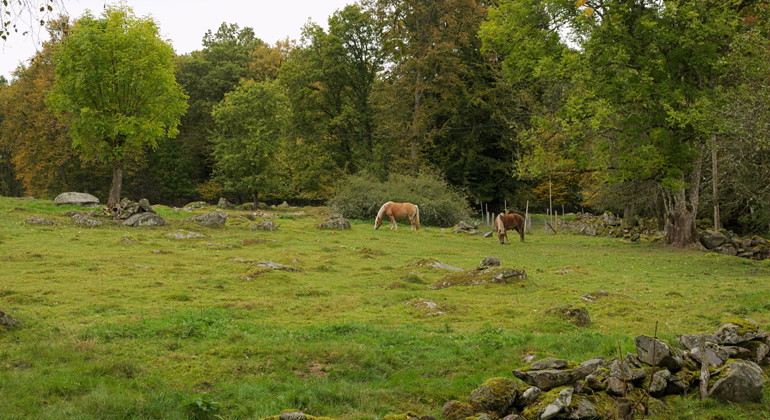
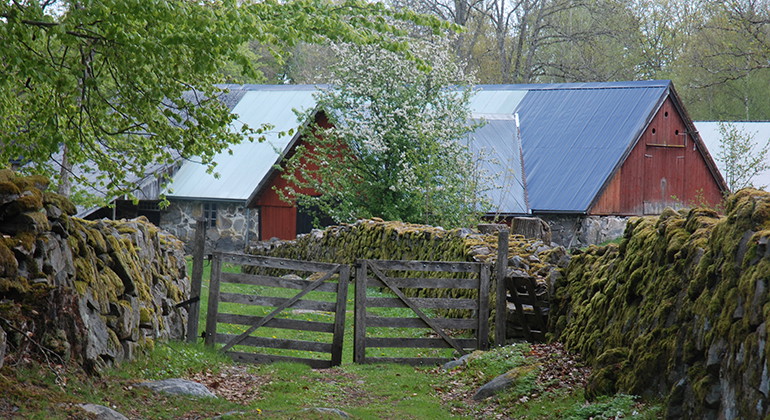
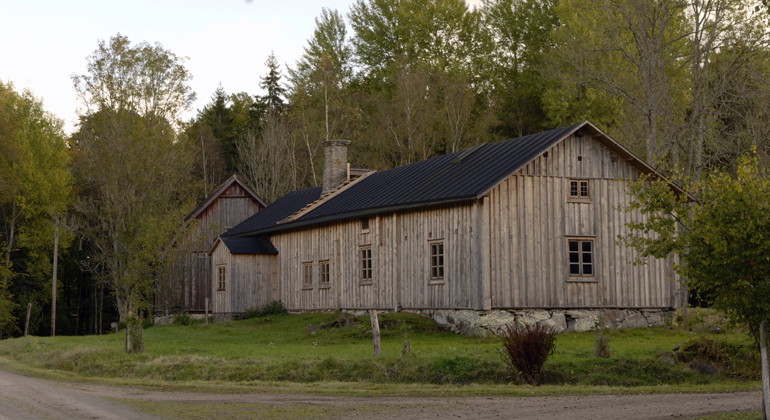
Örnanäs was originally a single farm, but it was divided into two farms at the beginning of the 19th century. One of the farms was later abandoned in the 1930s and since then there is only one farm here again. However, there are many remains of the abandoned farm, as well as of crofts and other buildings that once stood on the site. There are also cairns and other traces that show where the old lobed fields used to be. Most of the area is now kept open by grazing, and in 2012 forest grazing was also reintroduced in the farm forest.
There are plenty of older, pollarded trees such as lime, ash and birch in the land close to the farm. The trees were felled to provide fodder for the animals. Branches with leaves were cut down in late summer to dry and serve as winter feed.
Trollatorpet
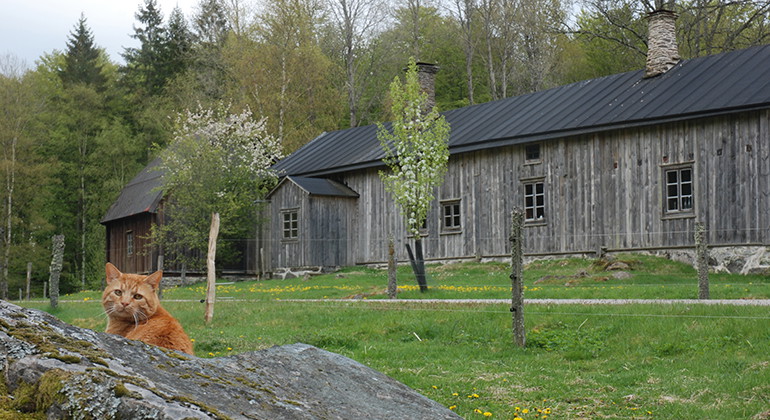
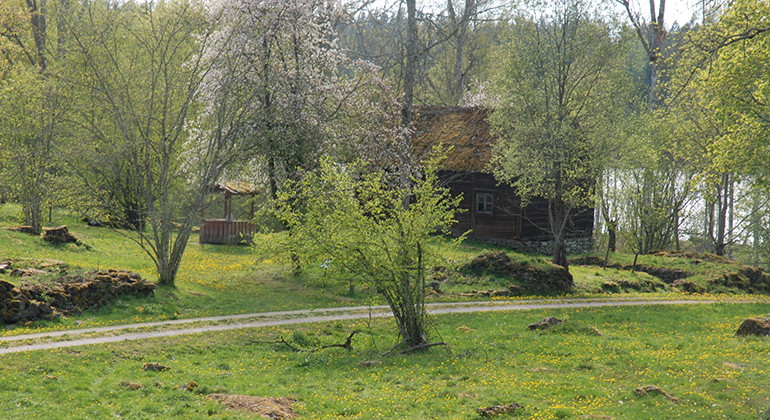
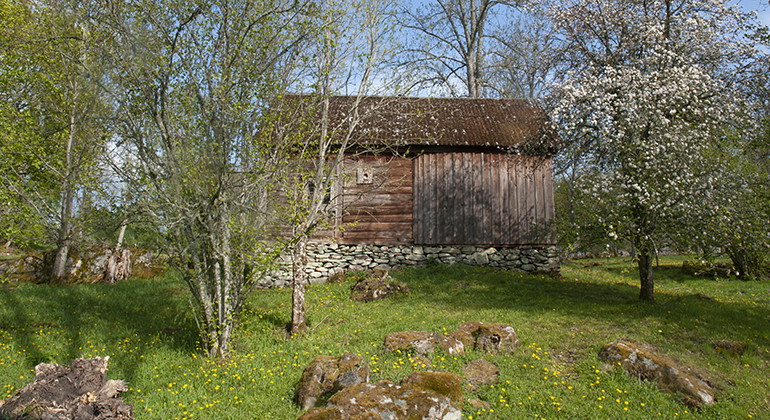
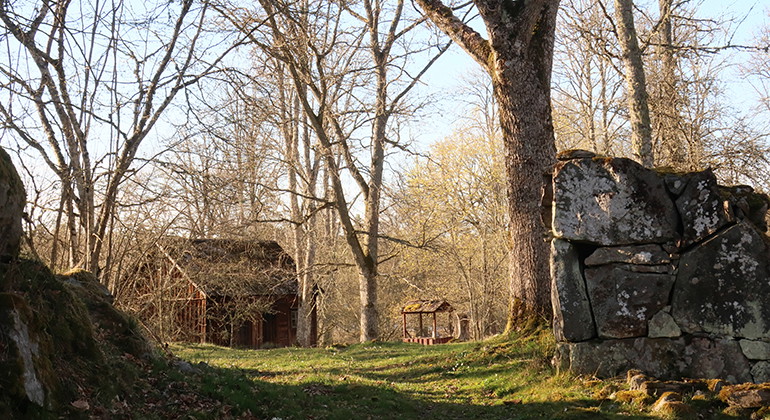
There were several crofts under the farm in Örnanäs. The only one that remains today is Trollatorpet, which has been inhabited since at least 1740. Trollatorpet is beautifully situated by Lake Farlången a couple of kilometers southwest of Örnanäs farm. It is also home to the oldest buildings in the culture reserve. The land around Trollatorpet is today kept open by grazing.
Make a visit back in time
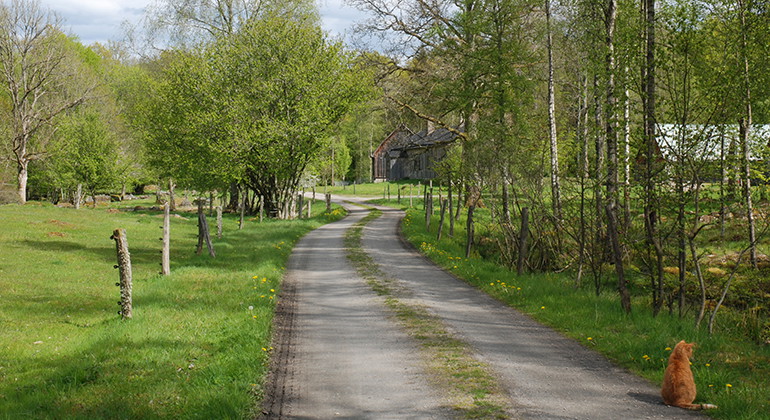
When visiting Örnanäs, you can walk around and see buildings, house foundations, fields and meadows and imagine yourself back to the time when Carl Svensson and his wife Bengta Nilsdotter lived on the farm in the second half of the 19th century. There is a brochure about Örnanäs that you can pick up at the county administrative board or download from the website.
In English
This living memorial to human endeavor lies on a farm in the middle of the deep forest of north-eastern Skåne. Örnanäs has been a farm for five hundred years and the land bears the marks of the area's history of cultivation, primarily during the 19th and 20th centuries.
Skåne's Only Culture Reserve
Örnanäs is the only culture reserve in Skåne. It is not simply nature that is protected here, rather the entire cultural heritage environment with its landscape, buildings, knowledge and traditions. Örnanäs Culture Reserve was inaugurated in 2006 and the aim is to demonstrate the development of a farm in the forest landscape. We get the opportunity to see how the living environment and the landscape might have appeared over one hundred years ago.
The Old Farmed Forest
Örsanäs is also home to one of the best examples of the farmed forests that developed in forested areas at the beginning of the 20th century. It was the forest that provided for all of the farming household's needs. In the forest they cut timber to build houses and fences, firewood to warm themselves, collected fodder for their animals and grazed their cows. The forest was significantly more varied than contemporary forests. There were trees and shrubs of various ages mixed with grassy clearings.
Örnanäs Farm
Örnanäs was originally a single farm, but was divided in two at the beginning of the 19th century. One of the farms was abandoned in the 1930s, since then there has again only been one farm. However, many relics of the abandoned farm remain, as do those of a croft and other buildings that once stood in this place. There are also cairns - created when the land was cleared of rocks - and other signs of where the old lobate fields once lay. Large parts of the area are now kept open through grazing, and in 2012 forest grazing was reinstated in the farmed forest.
On the land close to the farm, there are lots of older, pollarded trees such as lime, ash and birch. Pollarding was done to provide fodder for the animals. Leafy branches were cut in late summer and allowed to dry to be used as winter fodder.
Trollatorpet
Several crofts were controlled by the farm at Örsanäs. The only one of these that remains is Trollatorpet, which has been occupied since at least 1740. Trollatorpet has a lovely setting by the lake Farlången, a couple of kilometers south-west of Örnanäs Farm. This is also where you'll find the culture reserve's oldest buildings. The land around Trollatorpet is kept open by grazing.
Aktiviteter og faciliteter
- Kulturreservat
Fakta
Established: 2006
Size: 70 hectares
Municipality: Osby
Administrator: County Administrative Board of Skåne
Protection type: Cultural reserve
Rutevejledning
Walk, cycle, take public transport or drive here. Map and directions via Google maps or coordinates (WGS84).
Regler
**Special rules and restrictions on the right of public access apply within the area.
Among other things, it is forbidden to:
- keeping dogs unleashed
- make fires
- camping or setting up a caravan/mobile home
- cycling, riding or driving motorized vehicles off the roads
- damage stone walls and other cultural heritage sites
You can read the full regulations in the fold-out box below.
Full regulations for visitors
Under Chapter 7, Section 30 of the Environmental Code, on the right to travel and stay within the reserve, it is prohibited in addition to what otherwise applies:
- to remove, drill, chisel, paint or otherwise damage blocks, stone walls, or other cultural remains
- to drive motorized vehicles off existing roads other than for agricultural or forestry purposes
- to affix a board, sign, poster or similar device, except for reserve signs and boundary markers
- organizing competitions or conducting activities that may disturb the cultural environment
It is also forbidden for visitors:
- to drive a motorized vehicle other than on a designated road to the parking area
- remove, drill, paint or otherwise damage living or dead trees, bushes or stumps
- camping, setting up a caravan, camping car or similar
- digging up, picking or otherwise damaging plants
- collecting insects or other invertebrates
- making a fire
- riding or cycling other than on existing roads
- bringing an unleashed dog or other pet, with the exception of hunting dogs kept by hunting rights holders
Kontakt
Adresse
Under LÄNKAR kommer du till aktuell reservatssida på Länsstyrelsens webbplats, med fördjupande information som kartor, broschyrer och hänvisning till relevanta aktörer. Här finns även en rapportfunktion för dig som vill lämna uppgifter om naturreservaten som vi förvaltar.
E-mailadresse
Organisationens logo
Jeg har været her
Jeg vil gerne derhen
Spørgsmål og svar
Stil et spørgsmål til andre Naturkartan-brugere.
Anmeldelser
0 anmeldelser
- 5 :
- 4 :
- 3 :
- 2 :
- 1 :
Brugernes billeder
Der er endnu ingen brugerbilleder. Vær den første til at dele et!