
-
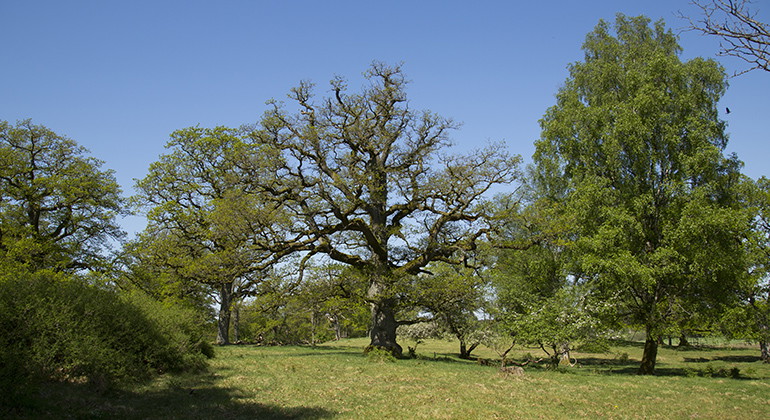
En av områdets grova ekar.
Foto: Alex Regnér -
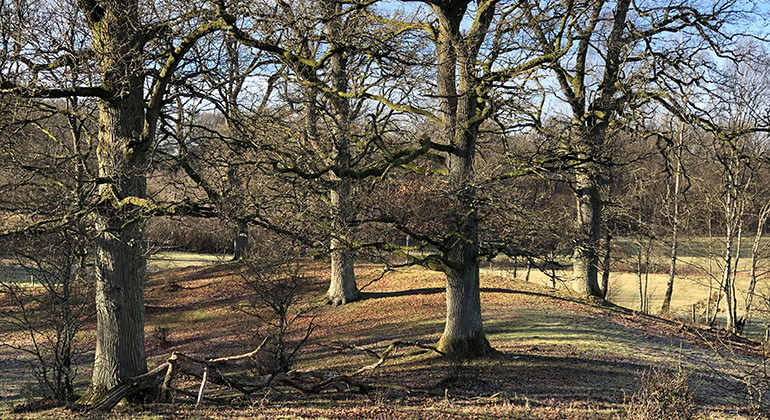
Foto: Carina Zätterström -
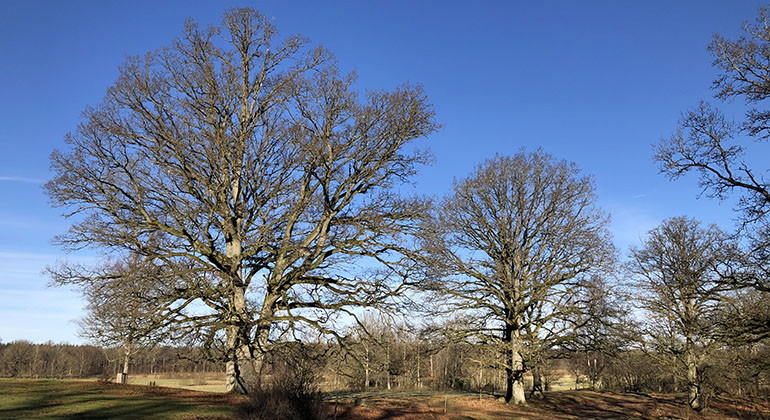
Foto: Carina Zätterström -
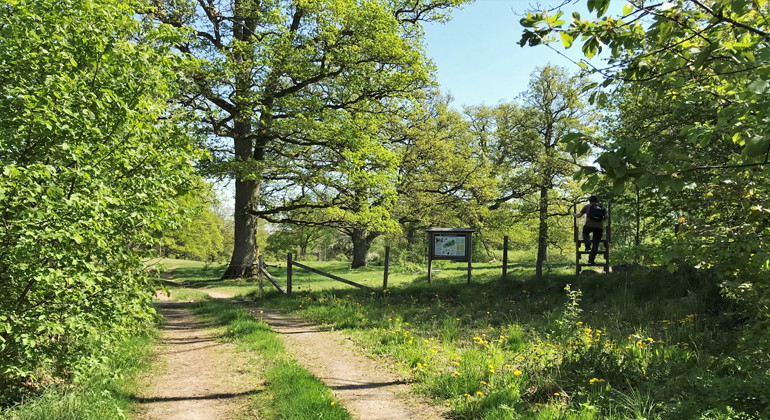
Foto: Viktor Persson -
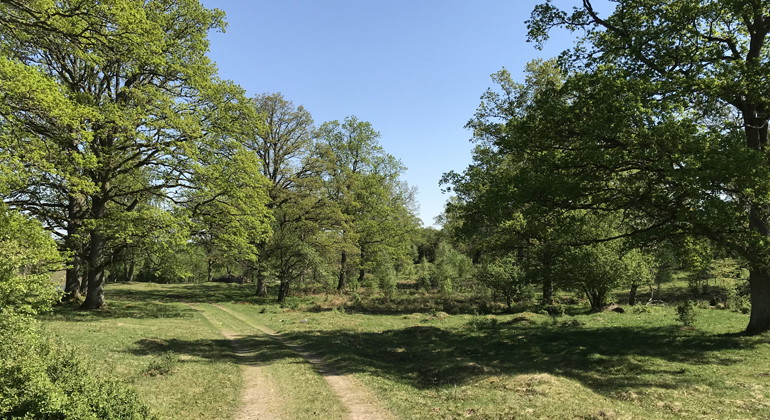
Foto: Viktor Persson -
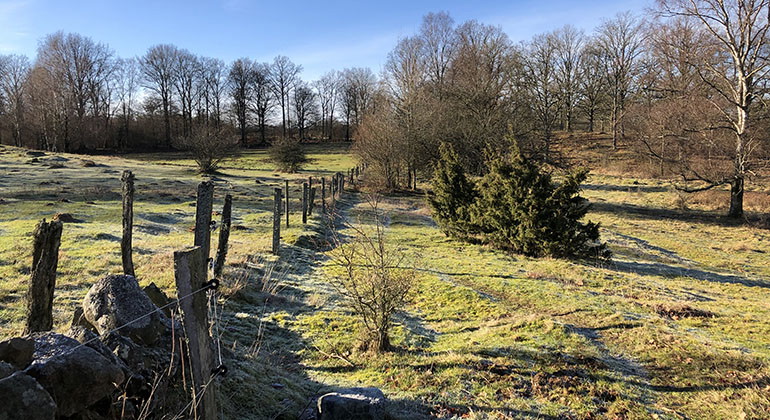
Foto: Carina Zätterström -
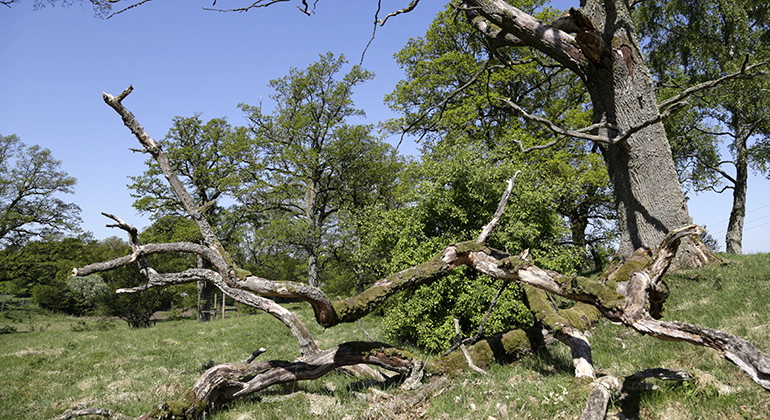
Foto: Alex Regnér -
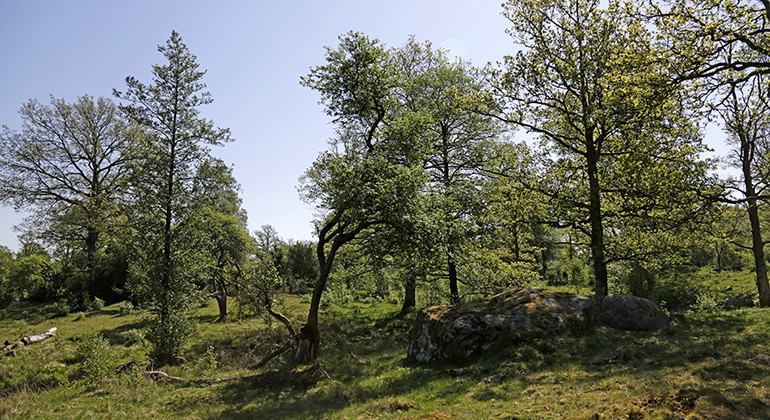
Foto: Alex Regnér -
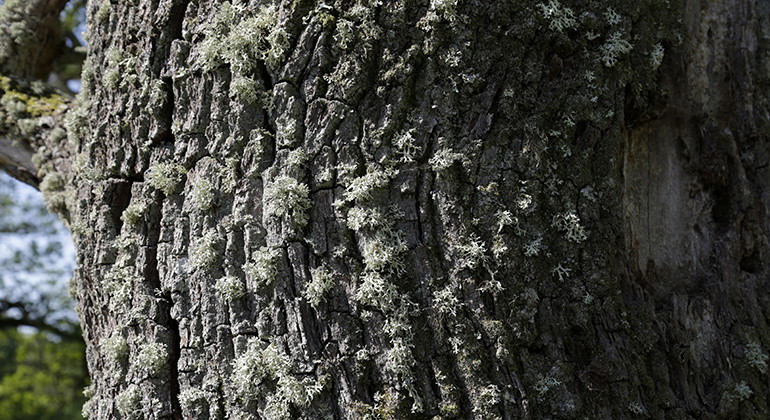
Foto: Alex Regnér -
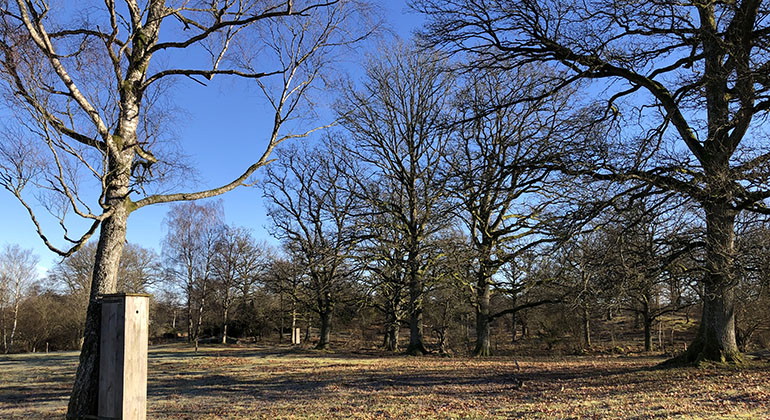
Foto: Carina Zätterström -
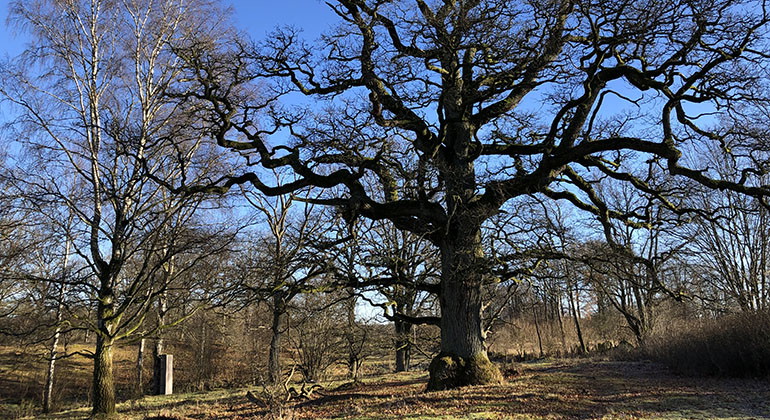
Foto: Carina Zätterström -
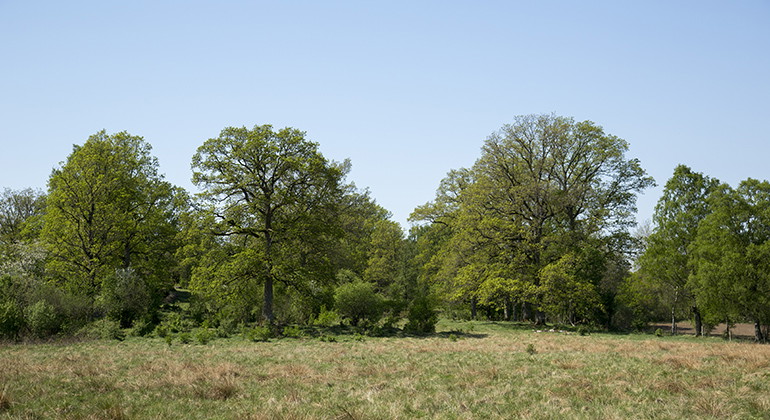
Foto: Alex Regnér
Maglö ekar, Naturreservat
- Naturreservat
- Amt: Skåne län
Handlinger
Beskrivelse
The Maglö Oak Nature Reserve is a small, hilly pasture with majestic old oaks. The oak grove is located at the Maglö manor, which dates back to the 17th century. A dirt road leads you through parts of the garden, which is located near Sösdala.
Mighty old oaks
Large old oaks give perspective on life and nature. You can usually only find them in cultural landscapes because they have to stand very freely to grow really big. Some of the oaks in the reserve are more than 500 years old.
Biodiversity in old trees
Under favorable conditions, an oak tree can live to be a thousand years old. There are thousands of animal, plant and fungal species that only live in old oaks. It is not only during the tree's lifetime that it hosts these species. Even after the tree's death and during the decomposition process, many organisms live off the tree. It takes about the same amount of time for this process to be completed as it took for the oak to grow.
The inhabitants of the hollow oaks
In old oaks, cavities often form after cracks or broken branches. These are important nesting sites for many animals such as bats and wood pigeons. When a tree gets old, the heartwood is broken down by insects and fungi, which means that the tree can become hollow. The heartwood then breaks down into mulch. The mulch itself consists of decomposition residues from the wood, droppings from insects and other animals living in the old tree, remains of birds' nests, dead baby birds and so on. The mulch is home to many species that are completely dependent on this environment.
Outdoor recreation
Parking is available. A simple dirt road takes you a bit into the reserve. The pasture is easy to walk in. Avoid dogs among grazing animals. Remember to take your rubbish home.
In English
Welcome to Maglö ekar Nature Reserve
Maglö Ekar (Maglö oaks) Nature Reserve is situated within a very ancient rural landscape. The Maglö Estate, which is just south of the reserve, dates from at least the 1600s. Many of the oaks in the reserve are at least as old.
Rural landscape with old oaks
Large, ancient oaks give life and the countryside perspective. They are most commonly found in the farming landscape because they need to stand in the open in order to grow so large. Some of the oaks in the reserve are more than 500 years old. The rare beefsteak fungus (Fistulina hepatica) can be found on some of the oaks.
Old oaks and biodiversity
An oak, in the right conditions, can grow to be up towards a thousand years old. There are thousands of species of animals, plants and fungi that are only found on old oaks. It is not only while the tree is alive that it is home for these species. Many organisms live on the tree, even after the tree has died and whilst it breaks down. It takes almost as long for the tree to completely break down as it does for the oak to grow up.
Home to bats and birds
There are often hollows formed from cracks or broken branches in old oaks. These are very important homes for many animals such as bats or stock doves.
Devil's bit scabious (Succisa pratensis) grows in the wet meadows and sloe (Prunus spinosa) creates impenetrable thorny thickets. The yellow-hammer (Emberiza citrinella) is common in wood pastures such as Maglö Ekar. The wryneck (Jynx torquilla) is a member of the woodpecker family but collects its food from the ground.
Regulations
Within Maglö Ekar Nature Reserve it is forbidden to:
- damage natural formations or surfaces, e.g. carve into a tree,
- intentionally break, or collect and take away dead wood, break branches, fell or in any other way damage living, standing dead or lying trees or bushes,
- dig up or in any other way damage plants (including mosses), lichens or wood-living fungi,
- bring dogs or other pets not on a lead.
- intentionally disturb or impinge on wildlife,
- put up posters, signs, plaques, notices or equivalent items,
Without permission from the County Administrative Board it is also forbidden to:
- collect invertebrates e.g. beetles or molluscs,
- put up foreign objects (e.g. geocaches or equivalent).
Aktiviteter og faciliteter
- Naturreservat
Fakta
Established: 2012
Size: 12 hectares
Municipality: Hässleholm
Manager: County Administrative Board of Skåne
Protection type: Nature reserve and Natura 2000
Rutevejledning
Walk, cycle, take public transport or drive here. Map and directions via Google maps or coordinates (WGS84).
Regler
**Within the area, special rules and restrictions apply to the right of public access.
For example, it is forbidden to:
- keeping a dog unleashed
- disturb or damage wildlife
- damage plants
It is important to note that this is only a selection of the rules.
Full regulations for visitors
In addition to regulations and prohibitions in other laws and regulations, it is forbidden to:
- damage any fixed natural object or surface formation, e.g. carving trees
- deliberately breaking, collecting or removing dead wood, breaking branches, felling or otherwise damaging living or dead standing or lying trees and bushes
- dig up or otherwise damage plants (including mosses), lichens or woody fungi
- bring dogs or other pets that are not kept on a leash
- intentionally disturb or affect wildlife
- affixing a board, sign, inscription, poster or similar device,
Furthermore, it is prohibited without the permission of the County Administrative Board:
7. collect invertebrates, such as beetles or molluscs. However, individual specimens may be collected provided that it does not violate the conservation regulations and that traps are not used,
8. placing foreign objects (e.g. geocaches or similar).
Kontakt
Adresse
Under LÄNKAR kommer du till aktuell reservatssida på Länsstyrelsens webbplats, med fördjupande information som kartor, broschyrer och hänvisning till relevanta aktörer. Här finns även en rapportfunktion för dig som vill lämna uppgifter om naturreservaten som vi förvaltar.
E-mailadresse
Organisationens logotype

Jeg har været her
Jeg vil gerne derhen
Spørgsmål og svar
Stil et spørgsmål til andre Naturkartan-brugere.
Anmeldelser
0 anmeldelser
- 5 :
- 4 :
- 3 :
- 2 :
- 1 :
Brugernes billeder
Der er endnu ingen brugerbilleder. Vær den første til at dele et!