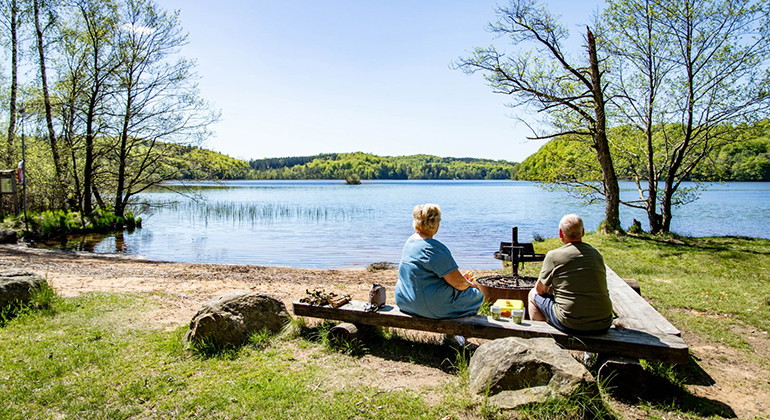
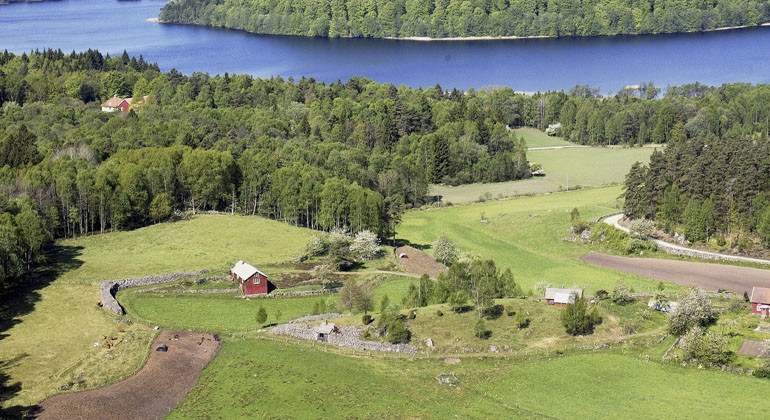
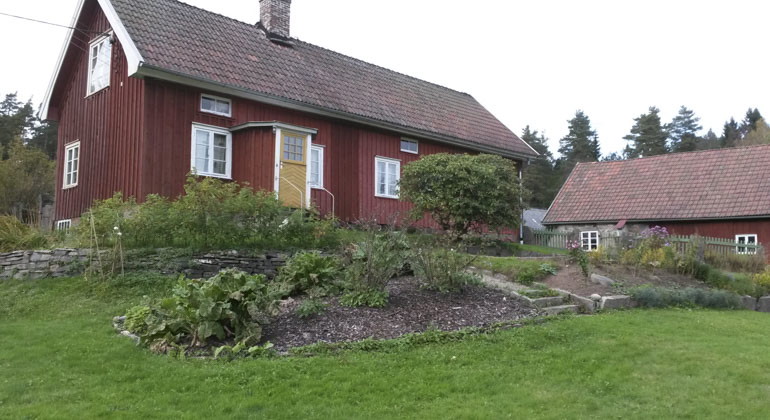
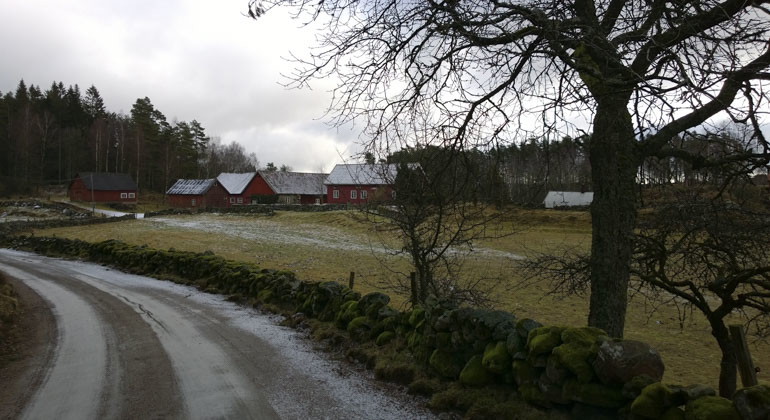
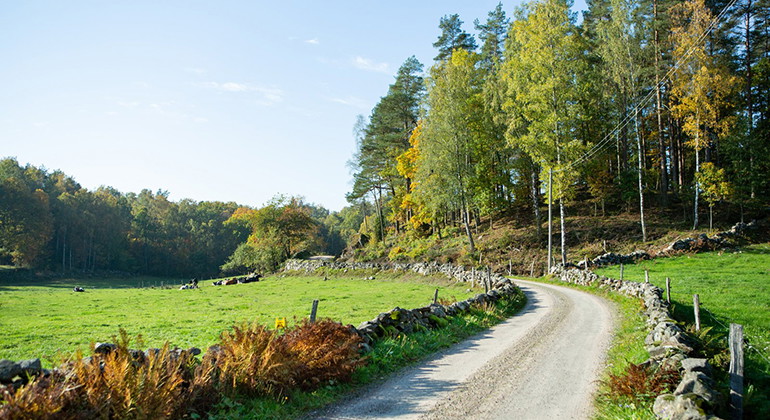
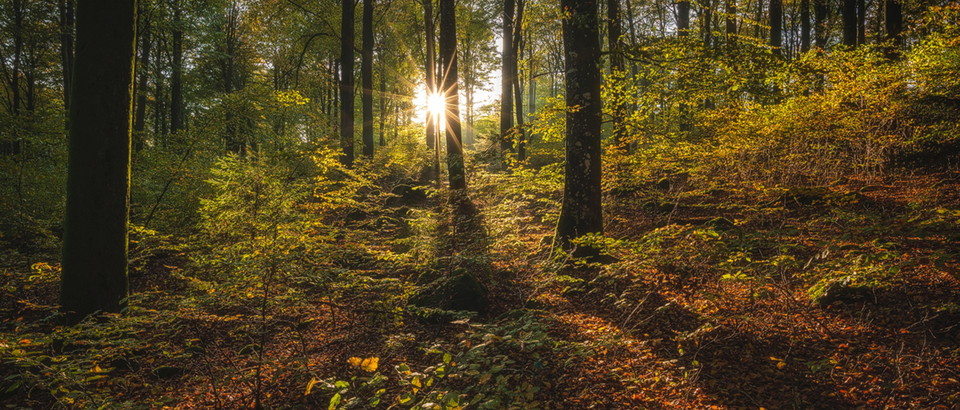
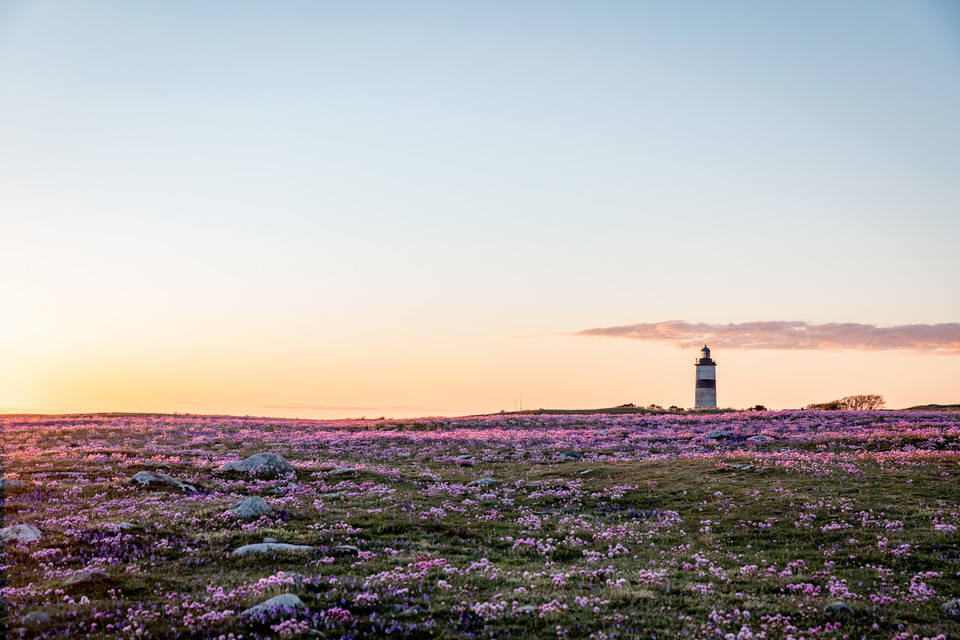
Björkekullen is an old crofting site surrounded by a scenic and small-scale agricultural landscape. The area's beauty values together with high cultural-historical values make Björkekullen attractive and well visited. At Björkasjön in the western part there is a small swimming area. You can also take a walk around the lake on the marked hiking trail.
The marked hiking trail is 5.5 kilometers and passes, among other things, the Älmebjär nature reserve. The hiking trail is one of 12 hiking trails in the Åkulla beech forest tourist area.
A landscape characterized by stone
The soil in the area contains a lot of stone. This, combined with the fact that the area has been farmed for generations, has created a landscape shaped by stone. In Björkekullen, you'll find an impressive system of well-made stone farmsteads, mighty cairns and terraces.
Plants and animals
Today, the small former fields and pastures are grazed. On the fields now used for grazing, the flora is relatively poor in species and affected by nitrogen. But on stony slopes, field margins and roadsides there is an interesting and herb-rich flora. There are species from both the hay meadows and the heather moors that used to be adjacent to the farm. At the beginning of the summer, haymaking and hogweed usually shine with their yellow flowers. Other heathery plants that you as a visitor can meet are box bracken, cat's foot, meadow rattle and daisy. In the past, meadowsweet was used as an indication that it was time for mowing. When the seed pods had dried to the point where they rattled when you shook the flower, it was the right time to mow the meadow.
Forest with untouched character
On a large part of the farm's old outfield, where the animals were let out for summer grazing, natural forest grows with trees of different ages. Here, the heather has been allowed to grow back naturally and the forest consists of pine, spruce and birch. There are some dry trees in the forest. A small island in Lake Björka is home to nesting Eurasian bitterns, and the island and surrounding water area have been protected as a bird sanctuary. There is also a small swimming area at Björkasjö.
Ancient monuments and settlements
In the landscape around Svartrå village there are a large number of ancient remains from the Bronze and Iron Ages. Two different settlements have been found in a field in the reserve. Finds have been made of flint, among other things.
Björkekullen was probably established as a croft under Korsagården in the 1810s or 1820s. The croft was built on the outskirts of the village, which consisted of heather moorland, and until then the site was probably used as pasture. On the 1856-57 parcel map, there is a dwelling house on the present site and a cottage further to the west. A large part of the farmland consisted of meadows.
Björkekullen has been farmed by the same family since 1846. The two brothers August and Johan have been responsible for most of the work of breaking new ground. They expanded the farm's arable area from 2 to 12 acres. The water level in Björkasjön was lowered by about one meter at the end of the 19th century or around the turn of the century, but it does not appear that any new cultivation was undertaken on the new land, the so-called land reclamation.