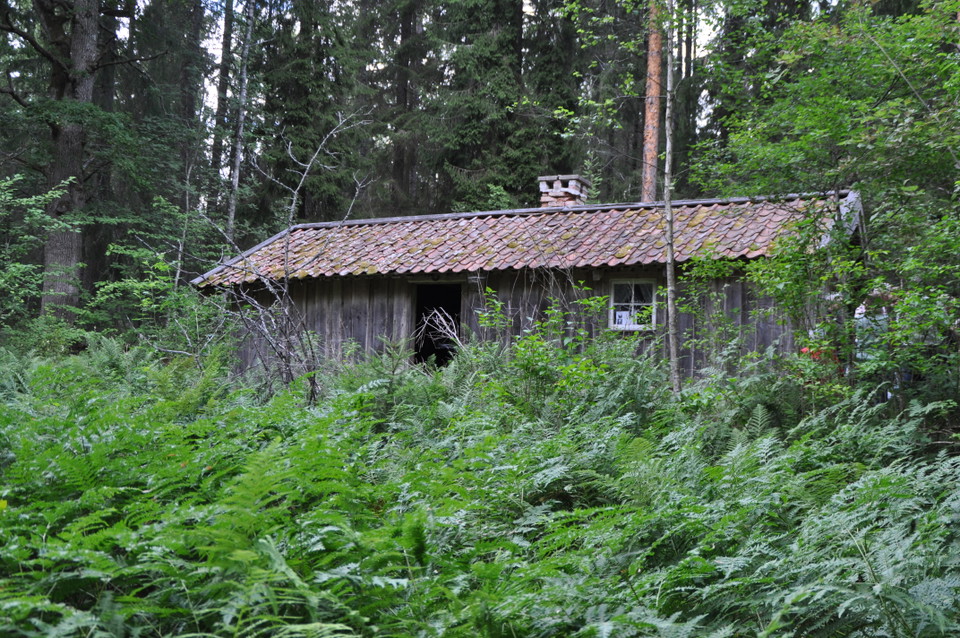
Maria Brobäck is something of a legend in the Sköldding area. She lived a hard life and was always disliked and treated badly by the authorities, but liked and respected by neighbors and friends.
Maria Brobäck was born in 1855 in Västerbotten. She was an enterprising young woman who traded at the markets in her home region. She was 35 years old when she married the itinerant trader August in 1890. By then, she had already given birth to three children, and there would be two more.
When the family ended up in Sörmland three years later, her husband, who was constantly on the move, was rarely seen. Maja was soon forced to apply for assistance from the poor relief service. A medical certificate was required to prove her inability to work.
For two years, Maja was the manager of the poorhouse. She was the one who baked the bread. But taste is as good as bread, and bread was an important issue. Patron at Skalunda was occasionally called out as a bread judge to resolve disputes about the acidity and baking of the bread.
At the beginning of the new century, Maja and her four children were placed in Lindstugan. Suddenly, the neighbors noticed that things were getting nice and tidy around the cottage. The roof was cultivated and the vermin disappeared.
However, the local council wanted to put her in the poorhouse and Maria had to fight to maintain her independence. All applications for assistance were rejected by the council, which felt that the children needed to be brought up under its control. Maria and the children picked berries all summer long, she did day jobs with the neighbors and struggled hard to supplement the little she received from the church.
In 1904, after eight years of absence, August had to answer to the church council for his absence. He blamed it all on his wife's combative temper and sharp tongue. He said that he had not helped the family because he was ill and weak and could barely support himself. He filed for divorce and promised to pay SEK 5 a month in maintenance. It was another seven years before the divorce was finalized. August then quickly remarried the woman he had started a new family with already in the 1890s. Yes, he forgot to mention that family to the church council.
Maria picked about 700 liters of lingonberries and blueberries every year. She fished from her oak, which she rowed across the lake in all weathers to do her business. She made brooms and whisks out of rice, and in winter she wove rugs. Until after the age of 70, she knee-cut the wooden floors of the station house. It was a job that had to be done after 11 p.m. every night, when the last train had left.
Maja lived in her cabin in the forest for 36 years. It was a hard and lonely life for a shy person who hung blankets over the windows to keep out the lightning. She only moved when she realized she wouldn't last another winter. Maria died at the age of 82, at Framtidshuset, as she called the old people's home.
Someone described her cottage, the forest and the lake as a Norrland in miniature. She wasn't one of us, she was a flower replanted in new soil. A man of freedom with great hospitality.
The text is taken from Södermanlands Hembygdsförbunds website.