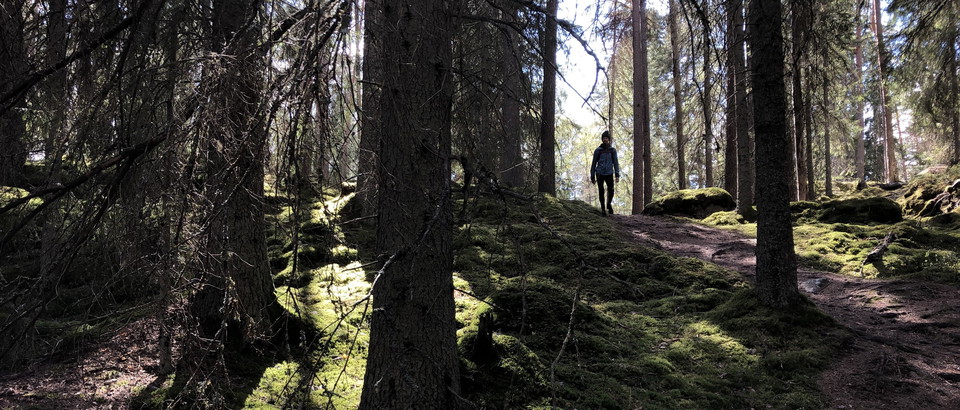
The Gimpeln nature reserve protects valuable old spruce forests. Here you can experience a forest that has long been untouched. This is very unusual in this part of the county, which is characterized by intensive forestry and mining.
Spruce ages
Spruce is the most common tree species in the reserve and many of the trees are very old. This can be seen in the lower part of the trunks, which are colored pink by the unusual old spruce bark beetle.
Old pines
There is plenty of dead, decaying wood in the forest. Dry trees and fallen tree trunks look like forest litter, but dead wood is valuable for many fungi, lichens, mosses and insects. Rare species such as the woolly tick and the wood tick grow on coarse, decaying spruce logs. On soft hardwood, fungi and lichen experts can find rarities such as yellow needle and foxtail.
Dead wood
The oldest pines in the area are up to 200 years old. The pines are coarse and tall. The oldest pines have smooth, silver-gray bark. If you look carefully up the trunk, you can spot the unusual pine tick. If you see a pine tick, you know that the pine it is growing on is over 150 years old.
Cedar forest
If you spot cheesy droppings under a tree, you've found one of the capercaillie's favorite trees. It likes to sit perched in a treetop and eat. Blueberries are its favorite food in summer, but in winter it eats almost only pine needles.
Swamp forests and brook troughs
High and consistent humidity favors the reserve's moisture-loving mosses and lichens. One of them is the rare limestone moss. It grows on boulders and mudflats along the stream that runs along the mountainside to the west. There is also an abundance of goldenrod along the stream. Rutlung moss, coral lichen and twine lichen are other species that live in the wet forests of the reserve.
Accessibility
At the moment, the road to the nature reserve's parking lot is not accessible by car. Even the marked path is difficult to access due to many fallen trees.