
-
Foton på sidan: Anders Janols och Johanna Malmgren, Länsstyrelsen -
-
-
-
Tures äng, Naturreservat
- Naturreservat
- Amt: Dalarnas län
Handlinger
Beskrivelse
In the old mining village of Tuna-Hästberg, a few miles southwest of Borlänge, lies the Tures äng Nature Reserve. The reserve covers about 1 hectare and consists of two hayfields, Tures and Lundvalls äng, as well as a pasture that connects them. The long-term use of the land and the lime-rich soil have led to many species thriving here, especially plants and fungi.
A Long History of Scything
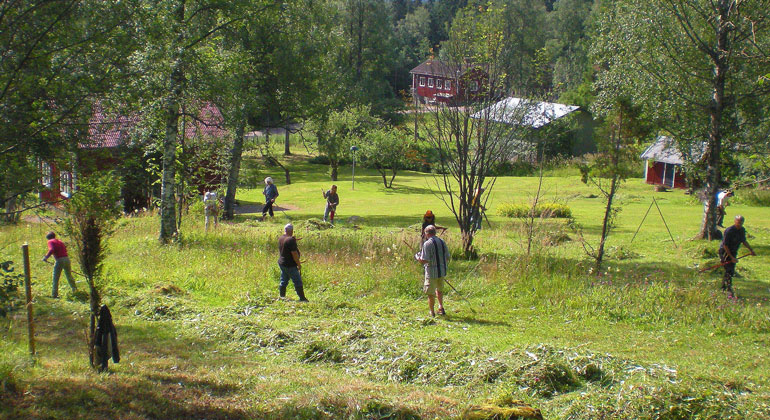
Tuna-Hästberg has its origins in a Finnish settlement from the mid-1600s. Old maps show that the meadow that gave the reserve its name began to be used as hayfield as early as the late 17th century. For more than 300 years, the land has thus been mowed with a scythe, almost without interruption. In the early 1900s, mowing ceased on many meadows, but on this site, Ture Persson maintained the tradition* between 1934 and 1964. In 1990, some members of the Swedish Society for Nature Conservation began mowing Ture’s meadow with scythes, and since 1991 they have been the formal stewards of the land. In recent years, the Tuna-Hästberg Local History Society has also become involved in its management.
The fact that the management has never ceased is a major reason why it still hosts so many species. At Lundvall’s meadow, traditional mowing ceased in the late 1950s, until the early 1990s when annual mowing was resumed. Despite this hiatus, this meadow also boasts a very rich flora.
* To “maintain” does not simply mean to claim something. In the context of meadows, “maintain” means to care for or tend the meadow. A well-maintained meadow is thus a well-tended one!
Blue-red helleborine and lady’s slipper
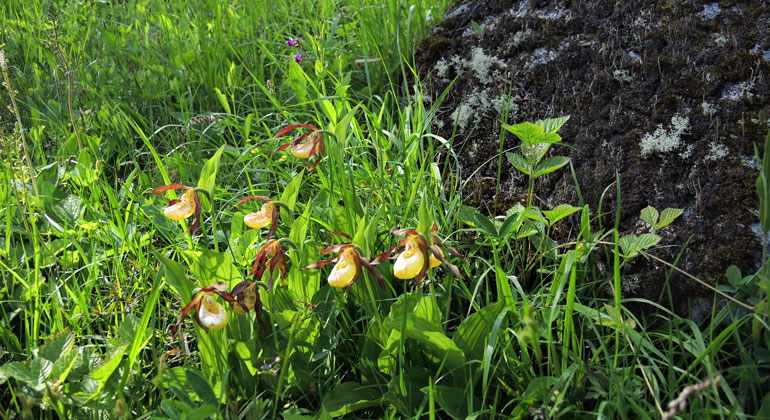
The reserve is home to a wealth of interesting and beautiful species. This is thanks to the long-term use of the land and the presence of lime in the soil. Over a hundred vascular plants have been found in the area. Among them are creeping bentgrass, blue moor grass, cat’s foot, quaking grass, dog’s-tail grass, field gentian, pasque flower, meadow saxifrage, twinleaf, milkwort, and snake root. The rare lady’s slipper orchid also grows here.
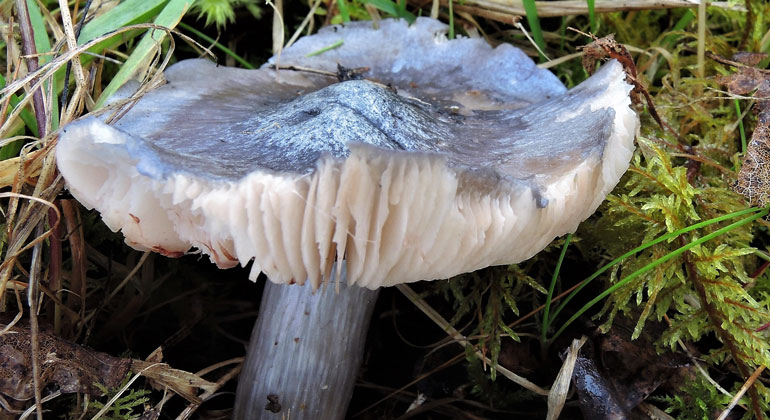
About 60 species of meadow fungi have also been found, including the very rare species blue-red bolete and sepia wax cap. The tree layer consists mainly of deciduous trees and is denser in the central parts.
The blue-red bolete and lady’s slipper orchid are shown in the slideshow above.
Please be considerate of landowners and grazing animals
You are welcome to stroll around the reserve. However, we ask visitors to be especially considerate here, as both Tures and Lundvalls meadows are located on private land directly adjacent to residential homes.
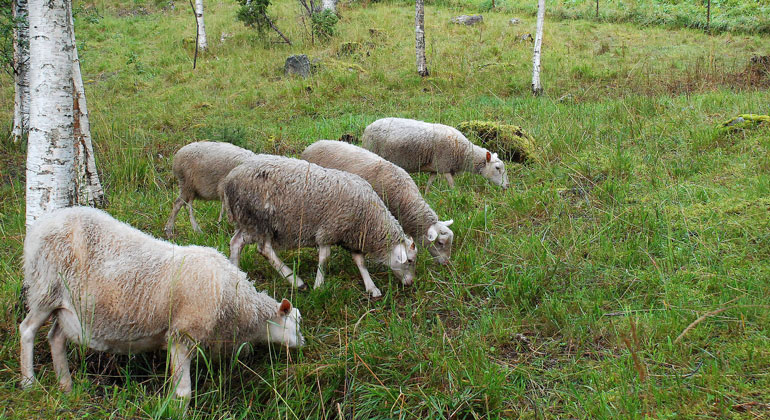
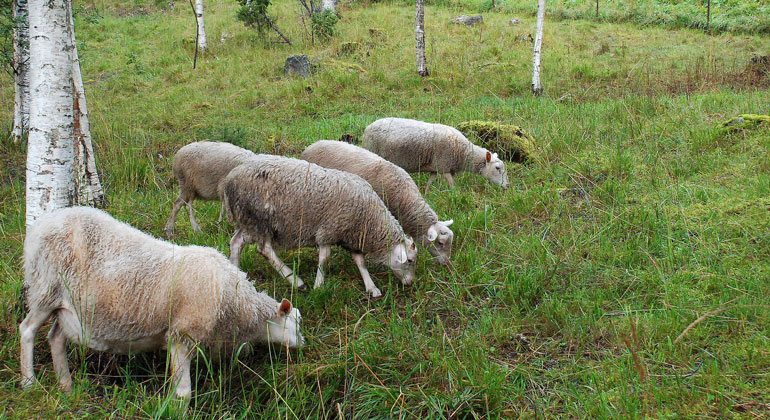
Mowing of the meadows usually takes place in late August. Until the meadows are mowed, we ask that you avoid walking around there too much, as trampled grass makes it difficult to mow the fields properly. During the summer, sheep and horses graze in the pastures. Please be considerate of the animals and avoid entering the pastures with dogs, as this can stress the grazing animals.
Visitor Information
To reach the reserve, turn north at the Laxsjövägen/Krongruvvägen intersection onto the side road heading northwest. After about 500 meters, there is a parking pull-off on the south side of the road that can accommodate about two cars.
Adjacent to the parking area is a shelter (though without a fireplace) and a picnic table. The rest area is managed by the Tuna-Hästberg Local History Association. There is also a gate here to enter the pasture and stroll around the reserve.
Aktiviteter og faciliteter
- Naturreservat
Fakta
Established: 2019
Size: 1 ha
Municipality: Borlänge
Administrator: County Administrative Board
Rutevejledning
The reserve is located in the municipality of Borlänge, in the central part of Tuna-Hästberg.
Regler
In the reserve, it is not permitted to...
- damage growing or dead trees—whether standing or fallen—as well as stumps and shrubs
- drive motorized vehicles off-road, whether on bare ground or snow-covered ground
- dig up plants, pick mosses, lichens, and wood-dwelling fungi, or collect animals (e.g., insects).
- hold or conduct competitions, camp activities, and other large-scale or recurring organized events.
Click on the nature reserve’s name and select the “Documentation” tab to view the documents.
Kontakt
Adresse
E-mailadresse
Organisationens logotype

Jeg har været her
Jeg vil gerne derhen
Spørgsmål og svar
Stil et spørgsmål til andre Naturkartan-brugere.
Anmeldelser
0 anmeldelser
- 5 :
- 4 :
- 3 :
- 2 :
- 1 :
Brugernes billeder
Der er endnu ingen brugerbilleder. Vær den første til at dele et!