
-
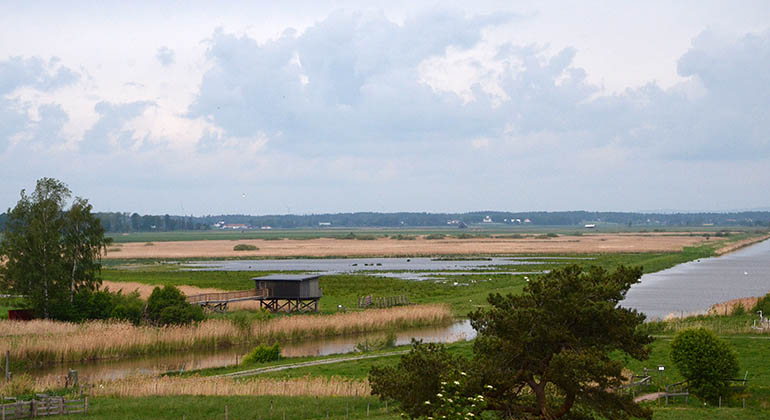
Utsikt från Öby kulle.
Foto: Elisabeth Karlsson -
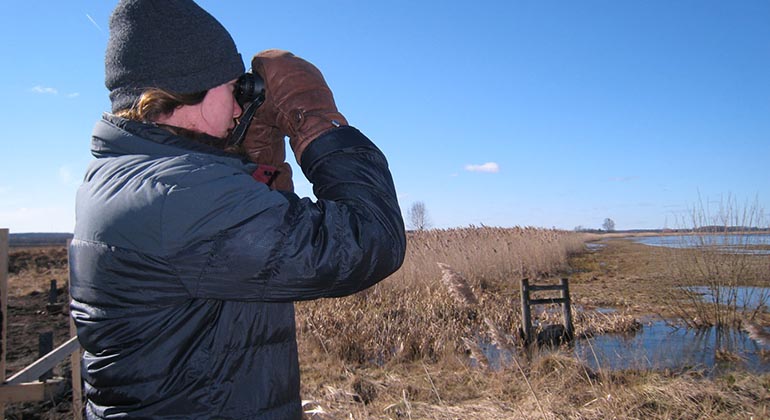
Foto: Per Wedholm -
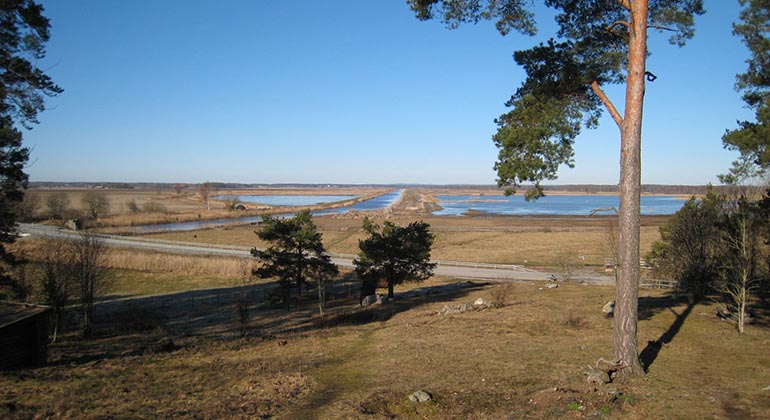
Kvismaren.
Foto: Per Wedholm -
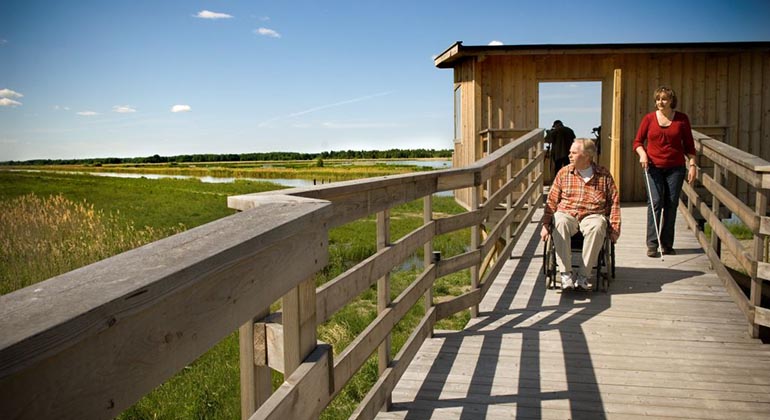
Kvismaren.
Foto: Ulla-Carin Ekblom
Kvismaren, Naturreservat
- Naturreservat
- Amt: Örebro län
Handlinger
Beskrivelse
The Kvismaren nature reserve's recreated lakes today form one of central Sweden's coolest wetlands if you are a bird - or like to look for birds. Not least in the spring and fall when many migratory birds take the opportunity to rest here. In the spring, many people also visit Öby Hill in the center of the reserve, where a large number of snakes gather among sun-warmed rocks before they coil out into Kvismaredalen.
Show consideration - do not disturb the birds
Many birds breed and nest in the Kvismare area every year. They are particularly sensitive to disturbance during the period March 1 - November 15. Do not go out along the canals or on the shore meadows during this time (Section 4 of the Species Protection Ordinance).
Winter time at Kvismaren
There is probably no one in the county who knows more about Kvismarens nature reserve than municipal ecologist Mats Rosenberg. In the video below, he tells us a little about everything that has been done in the area and when to go there and what to look for.
Before the lake was lowered
Before Hjälmaren's surface was lowered at the end of the 19th century, Östra and Västra Kvismaren were two shallow lakes. According to the old county map from the 1860s, the shore meadows around the lakes were extensive hay meadows. Perhaps cows also grazed the shore meadows after haymaking. The lakes were also used for hunting, fishing and reed cutting.
Erik Rosenberg's discovery
When Lake Hjälmaren was lowered by one and a half meters, the lakes slowly began to grow again. Leaf litter took over the former clear water surfaces, and when ornithologist Erik Rosenberg 'discovered' the area in the 1920s, it was already heavily overgrown. The annual flooding was overcome in the 1950s, when the area was embanked and the Kvismare canal straightened.
Restoration of the lakes
Today, man has recreated parts of Kvismaren through active nature conservation efforts. The reeds have been milled away and the water level regulated to mimic natural differences in level. Kvismaren is a large area with many observation sites, hiking trails and bird towers. Öby kulle is the base of the area. There is a toilet, barbecue area and information signs.
Large numbers of snakes
Large numbers of snakes and vipers can also be seen at Öby kulle when they emerge from their hibernation burrows deep inside the frost-free hill during the first warm spring days. After mating, they head out into the landscape.
Birds of the wetlands
From Öby hill, a path leads to Rysjön, where platforms and bird towers provide the opportunity to see the birds up close. In Rysjön breeds, among other things, gadwall, oystercatcher, black-necked grebe, gray-necked grebe and spoonbill. The reed beds are home to bitterns, bearded tits, warblers and brown harriers. A hiking trail also leads from Öby kulle via Västra Fågelsjön to Östra Fågelsjön and Åslaholmen.
Sörön nature reserve
Further away is the Sörön nature reserve, which with its impressive oak and elm forest attracts many hole-nesting bird species and singers. Sörön was an island before the lowering of Lake Hjälmaren in the late 1800s. Visit Sörön in the spring, when a sea of wood anemones blooms. The areas that are now grazed are the former arable land. There are many traces of the old agricultural landscape, such as house foundations, earth cellars, stone walls and cairns.
Horsetail and calamus
The wetlands contain several unusual plant species that thrive in the nutrient-rich plain lake. Examples include narrow-leaved cattail, horsetail, water aloe and calamus. The area is also home to many dragonfly species.
200 bird species every year
Around 200 bird species are seen in the area every year. Several of them are rare, with more or less regular visitors such as the evening falcon, bush warbler, corncrake, quail, snipe, turtle dove, reed warbler, lapwing, white-tailed eagle and peregrine falcon. Kvismaren is an important resting place for cranes and geese. During the fall evenings, large flocks of geese and cranes fly into the area to spend the night, and it is a primeval, magnificent spectacle to hear and see thousands of birds going down to land at dusk.
Internationally valuable Ramsar site
Sweden has designated Kvismaren as a Ramsar site. The Ramsar Convention is an international agreement aimed at achieving conservation and sustainable use of wetlands. Among other things, the countries that have signed the convention must designate the most valuable wetland and aquatic environments in the country as Ramsar sites and ensure their conservation.
Accessibility
In Kvismaren there are several accessible viewing towers: at Löten, Rysjön and Killingemaden (Ormkullaplattformen). A paved path leads to the tower at Löten while the roads to the towers at Rysjön and Killigemaden (Ormkullaplattformen) are grassy and can be somewhat uneven. At Rysjötornet, a helper may be needed to get up the ramp and open the door to the tower. At Öby kulle there is an accessible toilet (open all year round) and a paved path along the south side of the hill, where you can look for snakes in the spring. There is also a fire pit adjacent to the parking lot at Öby kulle.
Is there firewood?
Firewood is available at the fire pit. Remember to burn in moderation, so that the wood is enough for future guests. The firewood is replenished regularly, but we cannot guarantee availability at all times. If you want to be sure to be able to make a fire - bring your own firewood. It is not allowed to burn sticks and branches from the forest in the reserve.
Take the bus to the reserve
Länstrafiken bus 824 runs from Örebro to Norrbyås, just north of the nature reserve.
Sign interpreted information
About the bird life in Kvismaren
Spring excursions in the Kvismaren nature reserve
Aktiviteter og faciliteter
- Naturreservat
Fakta
Municipality: Örebro, Hallsberg and Kumla
Year established: 1978, extended in 1979, 1981, 1982 and 1996
Area: 732 hectares
Landowners: Swedish Environmental Protection Agency and individuals
Manager: County Administrative Board
Reserve creator: County Administrative Board
Natura 2000: the area is part of the EU's network of protected nature, SE0240058 Kvismaren
Ramsar: The area is included in the global nature conservation convention Ramsar, 24 Kvismaren
Rutevejledning
The reserve is located about 14 km southeast of Örebro and about 14 km east of Kumla. The reserve can be reached from several different directions. There are signs on highway 52 between Kumla and Odensbacken and on road 207 between Örebro and Odensbacken. The main entrance is at Öby kulle, in the center of the reserve. Coordinates to the main entrance (Öby kulle): 59.1779293,15.3763245 (WGS84), 6559925.48,521508.99 (SWEREF99).
Regler
In the reserve it is prohibited to:
- damage the soil or vegetation, for example by digging or flower picking
- disturbing wildlife
- bring an unleashed dog
- make fires
- drive a motorized vehicle
- park in places other than those specifically designated
- use boats, canoes or other waterborne craft
- camping or setting up a caravan
Kontakt
E-mailadresse
Organisationens logotype
Jeg har været her 4

Jeg vil gerne derhen
Spørgsmål og svar
Stil et spørgsmål til andre Naturkartan-brugere.
Anmeldelser
0 anmeldelser
- 5 :
- 4 :
- 3 :
- 2 :
- 1 :
Brugernes billeder
Der er endnu ingen brugerbilleder. Vær den første til at dele et!