-
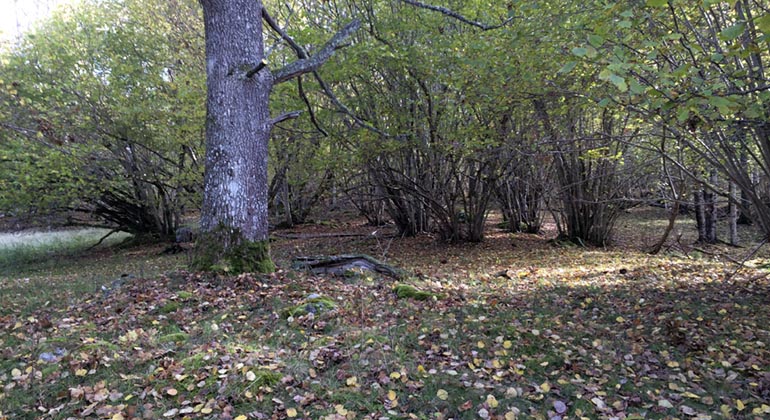
Kopparbergs äng.
Foto: Karin Sund -
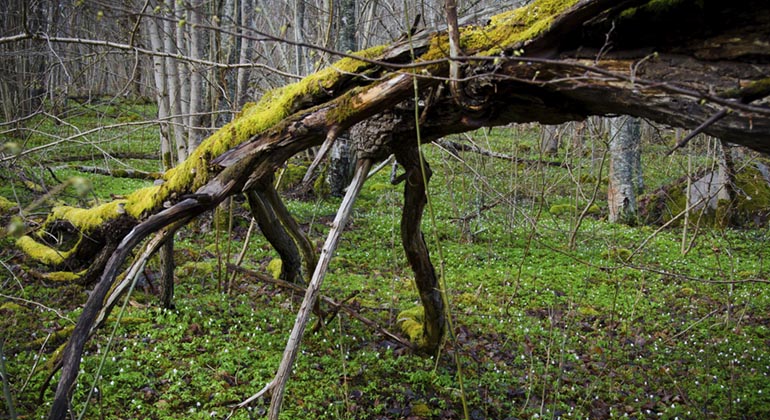
Kopparbergs äng.
Foto: Kristian Fossmo -
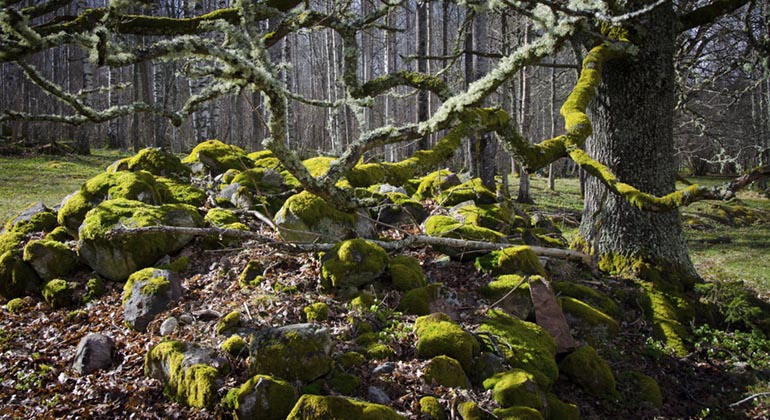
Kopparbergs äng.
Foto: Kristian Fossmo -
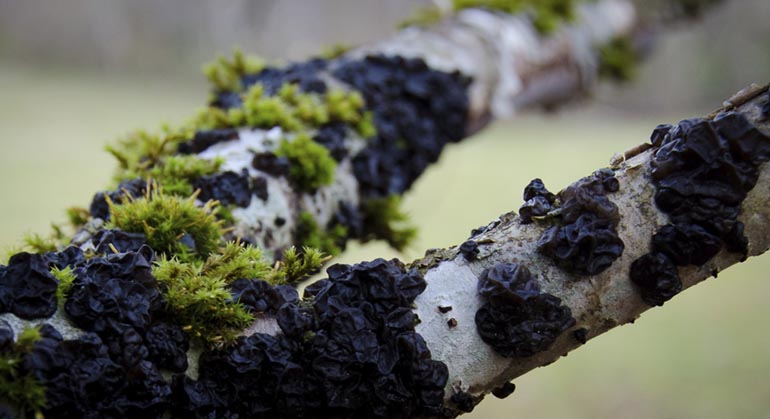
Vårtkrös, kopparbergs äng.
Foto: Kristian Fossmo
Kopparbergs äng, Naturreservat
- Naturreservat
- Guide: Länsstyrelsen Örebro län
Handlinger
Beskrivelse
Kopparbergs äng nature reserve is located on the slope towards Hjärtasjön. The old meadows and fields have long been used for growing and harvesting hay. There are many plants and fungi associated with the older cultural landscape, as well as many old deciduous trees with rare lichens on their rough bark. A 1.2 km long marked path runs through the reserve.
Old meadows and arable land
This area has long been characterized by mining. Typical of small-scale forestry is the location of buildings on high ground with arable land around them. Meadows and pastures were located in the lower, wetter areas. At the end of the 19th century, a large part of the reserve was meadowland. Late summer was the time for mowing, when grass and herbs were cut with a scythe and dried into hay, which was saved as winter feed for the cattle. Despite the fact that the land has been overgrown for 30 years, many of the typical plants and animals of the meadow can still be found here: vascular plants such as maidenhair fern, bluebell and pig's-foot, and fungi such as bloodwax fungus, meadow waxcap and light meadow finger fungus.
Traces of the sea waves
On the slope down to the lake, you can still see the traces of the sea that spread out after the last ice age. At the top of the slope, the remains of a seawall are visible. Around 9,000 years ago, the sea waves crashed right here. Sand and gravel were washed away, while the slightly larger stones remained and were ground round against each other by the waves. The seawall marks the highest coastline, i.e. the highest level reached by the sea.
Trinity Springs
In the south-western part of the reserve, the groundwater emerges from two springs called the Trinity Springs. Until the 1950s, local people gathered for a celebration at the springs on Whitsun Day. This tradition is said to go back a long way, perhaps to the Middle Ages. The springs also create a moist environment which, together with the slightly calcareous soil in the area, means that many deciduous trees such as ash, elm and maple thrive here.
Old deciduous trees and rare lichens
The old deciduous trees are home to several rare lichens, such as the brown shafted lichen, the pale crater lichen and the pink shield lichen. The large number of specialized and demanding lichens and mosses on trees shows that old broadleaf trees have existed in Kopparbergs äng for a very long time. It is likely that many "pollarded" ash and elm trees used to grow in the meadow. "Hammering" was a method of pruning deciduous trees and harvesting leaves as winter feed for grazing animals. Some of the old ash trees have an appearance that shows they have been pruned. Old deciduous forests are also important habitats for insects, snails, shells and some birds. Among the more interesting plants associated with deciduous forests are: desm bud, soapwort, witch hazel, water primrose, spring pea, sub-violet, marsh marigold, wood anemone and fern, and among the fungi: black chanterelle and smoke finger mushroom.
Sign-interpreted information
Aktiviteter og fasiliteter
- Naturreservat
Fakta
Municipality: Askersund
year of birth: 2006
Area: 14 hectares
Landowner: Private
Manager: County Administrative Board
Reserve creator: County Administrative Board
Natura 2000: the area is part of the EU's network of protected nature, SE0240106 Kopparbergs äng
Veibeskrivelse
Kopparbergs äng is located on the southern shore of Hjärtasjön, 15 km south of Pålsboda, 9 km northwest of Hjortkvarn and 3 km northeast of Närkesberg. From Hjortkvarn, head west via the villages of Haddebo and Munkerud. In Munkerud turn right at the sign for Kopparberg, after about 500 m you arrive in Kopparberg. From Skyllberg you go east via Rönneshytta to Närkesberg. In Närkesberg turn left towards Hjortkvarn. After about 3 km you arrive at a turn-off to the left, signposted towards Kopparberg.
Forskrifter
In the reserve it is prohibited to:
- remove or damage dead trees or parts of trees other than what is stated in the established management plan
- picking vascular plants or fungi other than for personal use
- collecting mosses, lichens and insects or other invertebrates
Kontakt
E-postadresse
Organisasjonens logotype
Jeg har vært her
Jeg ønsker å dra hit 1
Spørsmål og svar
Still et spørsmål til andre brukere av Naturkartan.
Omtaler
0 anmeldelser
- 5 :
- 4 :
- 3 :
- 2 :
- 1 :
Brukernes bilder
Ingen brukerbilder ennå. Bli den første til å dele!